
Le mille vie creative di Francesco Morini.
Nasce nel 1981 e nella vita si dedica a mille lavori. Mille è una parola che tornerà spesso, nella sua vita.
Tra le varie esperienze, il catering finirà per avere un posto speciale… ma non è ancora tempo.
A metà degli anni Zero si dedica a una combinazione piuttosto classica: alternare lavori interinali alla carriera musicale.
È un rapper di buon successo, voce e autore con il nome d’arte di Millelemmi.
In quegli anni, si dedica all’hip hop classico e sperimentale, presentando anche un’opera rap al Teatro Comunale di Firenze.
Poi tutto si ferma.
La sensazione? Aver fatto tutto il possibile con la musica.
Almeno, tutto quello che poteva fare senza ucciderla.
Si stacca dalla musica perché non ha più voglia di troppe parole.
Un ossimoro: un rapper silenzioso.
Sente il bisogno di ascoltare gli altri, di mettersi di lato, di non stare più al centro della scena.
Decide che la musica non deve essere una carriera. La vuole pura, fatta solo per gioia personale.
Proprio in questo periodo conosce Giulia ed Elena.
L’amore per la cucina nasce da molto tempo prima.
Gli è sempre piaciuto l’aspetto sociale, conviviale.
Con Kitchen Wishes diventa maitre di sala e direttore creativo degli eventi di un catering molto speciale.
Un catering fatto di dedizione, creatività e passione.
All’inizio l’idea è unire le sue passioni musicali al lavoro di Kitchen Wishes, creando un ibrido, un luogo dove i piatti si recitano, si ballano, dove musica e danza diventano parte della scena di un evento culinario.
A volte riesce a realizzarlo, anche se è difficile.
Quello che vive oggi è una ricerca fatta di amore, convivialità e socialità.
La domanda che lo porta avanti ogni giorno è: di cosa c’è bisogno?
Cosa posso irradiare nell’atmosfera?
Immerso in un mondo concreto, in cui è importante capire le priorità, è il primo ad arrivare, l’ultimo ad andarsene, monta, carica, scarica, accoglie, saluta.
Il suo ruolo è una sorta di ponte tra Elena, Giulia e il personale.
Permette loro di creare senza intoppi, di liberare l’arte dalle piccole incombenze quotidiane.
Una sorta di bodyguard della creatività, che difende il confine.
A volte rimane da solo, ed è una bella sensazione.
A volte si esibisce con un quartetto jazz.
A volte, con Kitchen Wishes, improvvisa.
Il jazz può essere tante cose, non solo musica.
L’obiettivo?
Fare un percorso con se stesso, star bene con le persone.
La pace, ma una pace divertente.
Fare un percorso con se stesso, star bene con le persone.
La pace, ma una pace divertente.
The Thousand Creative Paths of Francesco Morini
Born in 1981, Francesco has lived a thousand lives.
A thousand — a word that keeps coming back to define him.
Among the many things he’s done, catering would eventually earn a special place… but that comes later.
In the mid-2000s, he followed a fairly classic path: switching between temp jobs and a music career.
He was a successful rapper — voice and writer — performing under the name Millelemmi.
Those were the years of classic and experimental hip hop, when he even brought a rap performance to Florence’s Teatro Comunale.
Then, everything stopped.
The feeling? That he had done everything he possibly could with music.
At least, everything he could do without killing it.
He stepped away from music because he no longer felt like using too many words.
An oxymoron: a silent rapper.
He felt the need to listen to others, to step aside, to stop standing in the spotlight.
He decided that music shouldn’t be a career — it should remain pure, made only for personal joy.
It was around that time that he met Giulia and Elena.
His love for cooking, though, goes way back.
He’s always loved its social, shared side — the togetherness.
With Kitchen Wishes, he became maître d’ and creative director of events for a very special catering company.
A catering built on dedication, creativity, and passion.
At first, the idea was to blend his musical roots with Kitchen Wishes — creating a hybrid world where dishes could be performed, danced, where music and movement became part of the dining experience.
Sometimes, he manages to make it happen — though it’s not always easy.
What drives him today is a search for love, connection, and conviviality.
The question that keeps him going every day: What do people need?
What can I bring into the atmosphere?
Grounded in a very practical world, where priorities matter, he’s always the first to arrive and the last to leave — setting up, carrying, unloading, greeting, saying goodbye.
His role is a bridge between Elena, Giulia, and the team.
He makes it possible for them to create freely — to keep the art untouched by everyday complications.
A kind of bodyguard for creativity, protecting its boundaries.
Sometimes, he’s left alone — and it feels good.
Sometimes, he performs with a jazz quartet.
Sometimes, with Kitchen Wishes, he improvises.
Because jazz can be many things — not just music.
The goal?
To walk a path with himself.
To feel good with others.
Peace — but the kind of peace that makes you smile.

Una cercatrice di storie alla corte di Kitchen Wishes
Leila Firusbakht è battagliera, difende le sue idee con convinzione.
Ha gli occhi scurissimi, molto intensi, seri, ma con una specie di luce giocosa, che brilla in sottofondo.
Apparentemente è centrata, concreta, racconta le sue esperienze con una sorta di passione controllata.
Ma sotto, qualcosa, una specie di piccolo demonio inquieto, racconta un’altra storia.
La storia di una persona che sa quanto è importante avere delle radici, ma non dimentica che ogni tanto è necessario staccarsi e… fare qualcosa di completamente diverso.
Dev’essere quella scintilla negli occhi.
Da sempre abituata a cavarsela da sola, dopo studi in scienze forestali, esperienze in campo giornalistico e molte battaglie ambientaliste, negli anni ‘90 comincia a frequentare il mondo del commercio equo e solidale. All’epoca, ancora, in pochi ne avevano sentito parlare.
Insieme ad altri amici, ha un’idea: unire questo tipo di percorso al catering, con attenzione a temi oggi comuni ma allora innovativi come il cibo a km zero, l’importanza dei prodotti di stagione, la filiera corta.
L’idea funziona: la porta ad aprire una prima sede a Firenze e a mettere su quella che diventa presto un’impresa di successo.
Trova la sua Ikigai, la sua “buona ragione per svegliarsi la mattina”, in un ambito, la cucina, a cui non aveva mai pensato.
“Non sapevo cucinare nemmeno un uovo… e tuttora non è cambiato molto.
Non avevo nessuno a cui ispirarmi, era una cosa del tutto nuova, ma ho scoperto abbastanza presto che quello era il mio lavoro”.
Scopre di poter essere una persona creativa, di avere un gusto particolare per la comunicazione, l’organizzazione e allestimento degli eventi, un gusto che piace anche agli altri.
È una piccola rivelazione: non ci aveva mai pensato.
La seconda sorpresa è che le piace tantissimo.
Leila viene da una famiglia multiculturale. Forse per questo non riesce a vedere né limiti né confini nei rapporti con le persone.
Ama fare feste, incontri, lavorare con gente da tutto il mondo, fare amicizia con persone molto differenti da lei.
Nonostante (o forse proprio per) questo vortice di contatti e persone, i viaggi importanti li fa da sola. Patagonia, Cile, Cuba, per citarne alcuni.
Viaggiare da sola obbliga ad aprirsi al mondo, a mettersi in discussione, a uscire dalla comfort zone, a sapersela cavare di fronte a rischi e difficoltà.
A proposito di comfort zone, l’approdo a Kitchen Wishes è proprio uno di quei momenti in cui l’abbandona del tutto.
Dopo ben 12 anni lascia un lavoro che amava: sente di aver bisogno di uno stimolo nuovo.
Non è una scelta ponderata: Kitchen Wishes le appare come un nuovo pianeta da esplorare. Da brava viaggiatrice, non può tirarsi indietro.
Lavorando da anni nell’ambito del catering fiorentino, ha già sentito parlare di Giulia ed Elena, e anche loro sanno chi è.
Le incontra per caso al bancone di un bar (gran posto, i banconi dei bar, per iniziare percorsi nuovi), si guardano e si mettono a ridere.
“La prima cosa che mi hanno detto è stata “ti conosciamo: tu sei la concorrenza!”. Abbiamo cominciato a parlare quella sera, e da lì è nata l’idea di fare qualche cosa insieme.
Presto mi sono resa conto che nel loro team c’era spazio per un certo tipo di figura, con competenze ben precise. Sentendole parlare mi è apparsa chiara in mente una frase: “sono proprio io!”-
Inoltre è una grande fan di David Bowie e resta colpita da una ricetta molto speciale di Giulia, pubblicata sul blog e dedicata proprio alla morte del Duca Bianco.
Gli astri, in qualche modo, erano già allineati.
Bastava solo una spintarella.
Leila capisce di essere una sorta di anello mancante. Una nuova, inaspettata linea di congiunzione tra Giulia, Elena e il resto del mondo, reale e virtuale.
Diventa caposala, contribuisce con le sue idee, si occupa della parte organizzativa e sociale.
Libera più possibile Elena e Giulia dalle incombenze esterne, in modo che possano dedicarsi a ciò che sanno fare meglio: giocare con la cucina, la creatività. l’invenzione.
Intanto impara da loro nuove lezioni, nuovi pianeti, nuove sensazioni. Lo scambio è continuo.
Il risultato è un trio tutto al femminile in cui la somma, come nelle migliori imprese, è maggiore delle parti.
Quell’uovo, alla fine, non ha mai imparato a prepararlo… ma non importa.
“Non ho mai imparato a cucinare… ma mi piace da impazzire tutto quello che ruota intorno al cibo. Socialità, teatro, musica, convivialità.
L’interesse mi scatta quando un piatto ha una storia da raccontare, un passato, un percorso originale.
Per me il cibo è un portale, una chiave per accedere a mondi diversi”.
A Seeker of Stories at the Court of Kitchen Wishes
Leila Firusbakht is a fighter — she stands her ground and defends her ideas with conviction.
Her eyes are dark, deep, serious, yet there’s always a spark — a playful light shimmering underneath.
On the surface, she seems grounded, focused, telling her stories with a kind of measured passion.
But beneath that surface, something restless — a small, curious demon — tells another story.
The story of someone who knows how vital it is to have roots, yet also understands that sometimes, you need to break away… and do something completely different.
It must be that spark in her eyes.
Independent by nature, after earning a degree in forestry sciences and spending years in journalism and environmental activism, Leila entered the world of fair trade in the 1990s — long before it was widely known.
Together with a few friends, she had an idea: to bring that same philosophy into catering, focusing on themes that are mainstream now but were groundbreaking then — local food, seasonal ingredients, short supply chains.
The idea worked. It led her to open her first space in Florence and launch what quickly became a successful business.
She found her Ikigai — her “good reason to wake up in the morning” — in a field she had never imagined: the kitchen.
“I couldn’t even fry an egg back then… and honestly, not much has changed.
I had no one to look up to, it was all completely new — but pretty soon I realized this was my job.”
She discovered her creative side — a natural talent for communication, organization, and event design — and people loved it.
It was a small revelation; she had never seen herself that way.
The second surprise? She loved it. Absolutely.
Leila comes from a multicultural family, and maybe that’s why she doesn’t see borders or limits in her relationships.
She loves to host parties, bring people together, work with others from around the world, and make friends with those who are nothing like her.
Despite — or perhaps because of — this whirlwind of people and connections, her most important trips are always solo. Patagonia, Chile, Cuba — just to name a few.
Traveling alone forces you to open up to the world, to question yourself, to leave your comfort zone and face the unknown with courage.
Speaking of comfort zones, joining Kitchen Wishes was exactly one of those moments when she left hers completely behind.
After 12 years in a job she loved, she felt the need for something new — not a calculated choice, but a pull.
Kitchen Wishes appeared like a new planet waiting to be explored. And as a true traveler, she couldn’t say no.
After years in Florence’s catering scene, she had already heard of Giulia and Elena — and they had heard of her.
They met by chance at a bar counter (a great place, by the way, to start new adventures). They looked at each other and laughed.
“The first thing they told me was, ‘We know who you are — you’re the competition!’
We started talking that same night, and from there came the idea of doing something together.
I soon realized there was room on their team for someone like me, with my particular skills.
Listening to them, one sentence appeared clearly in my mind: ‘That’s me!’”
She’s also a huge David Bowie fan — and she was struck by one of Giulia’s recipes, posted on the blog as a tribute to the passing of the Thin White Duke.
The stars, it seems, were already aligned. They just needed a little push.
Leila became what she calls “the missing link” — an unexpected bridge between Giulia, Elena, and the world outside, both real and digital.
She’s now the head of service, contributing her ideas and handling the organizational and social aspects.
She does her best to free Giulia and Elena from the daily logistics, so they can focus on what they do best — playing with food, creativity, invention.
Meanwhile, she keeps learning from them — new lessons, new planets, new sensations. The exchange never stops.
The result is an all-female trio where, as in the best collaborations, the whole is greater than the sum of its parts.
That egg? She still hasn’t learned how to cook it… but it doesn’t matter.
“I’ve never learned to cook — but I’m crazy about everything that happens around food:
the social moments, the theater, the music, the togetherness.
What fascinates me is when a dish has a story to tell, a past, a journey of its own.
For me, food is a portal — a key that opens doors to different worlds.”

A Firenze il cibo si coglie a mezz’aria, tra arcobaleni e sogni gonfiati a elio.
I nostri “momenti squisiti” si moltiplicano… stavolta la piccola (ma gustosa) astronave Kitchen Wishes è atterrata all’evento finale della sfilata organizzata da Benetton per Pitti Bimbo.
Siamo stati chiamati a essere, semplicemente, noi stessi. Abbiamo avuto la possibilità di inventare e cucinare a 360°, affidandoci al nostro spirito giocoso di eterni bambini travestiti da adulti.
A farla da padrone, i colori della bandiera logo di Benetton, la fantasia e… l’elio!
Il risultato è stato un’autentica esplosione di colori, palloncini e ovviamente sapori. I sapori di Kitchen Wishes.
Il cibo vola!
L’invenzione principale? Chips di verdure e pop corn sospesi in aria con palloncini a elio che fluttuavano nell’aria, lasciando i piccoli bocconi sospesi proprio all’altezza degli invitati (e non avete idea della difficoltà di trovare l’esatto punto di sospensione…).
Alla fine della sfilata, lo stand si è trasformato in una selva di palloncini fitta colorata come il sogno di un bambino, che sono entrati dal portone principale fluttuando in mezzo alla folla e sfilando in passerella.
Palloncini danzanti a trasportare snack gustosi.
Colori, colori, colori!
Non è finita qui, naturalmente: il finger food è stato portato su assi di legno colorate con i colori della bandiera, come tavolozze su cui disegnare cibo policromo.
Ma ecco il menu, con tanto di abbinamenti cromatici:
Flag Finger Food
- Arancio: hummus di lenticchie rosse all’arancia e coriandoli di carote
- Verde: mousse di broccolo e mandorle, germogli di pisello
- Rosso: con paté di pomodori secchi, pomodorino confit e chilli croccante
- Blu: bon bons di robiola e fiori di fiordaliso
- Giallo: con pane alla curcuma, mousse di sedano rapa al curry, indivia
Per ogni colore c’era anche una bevanda: serviti su vassoi bianchi in tumbler alto, ecco i nostri Flag Spritz:
- Arancio: Aperol
- Verde: menta
- Rosso: Campari
- Blue: Curacao
Infine, per gli astemi, altri due drink analcolici a completare i colori della bandiera:
- Giallo: cedrata
- Bianco: cocco
Flag Dessert
I colori della bandiera di Benetton non sono mancati neppure al momento del dessert, con golosi biscotti glassati a concludere il nostro catering multicolore.
Tonare bambini
Lo spirito dell’infanzia soffia forte nelle nostre menti, ormai lo sapete (talvolta fino a spettinarle…). Proprio per questo siamo stati immensamente lieti di poter giocare – seriamente come solo i bambini sanno fare – con i nostri balocchi preferiti: cibo, colori, palloncini e fantasia.
Sicuri che almeno per un po’ tutti gli invitati abbiano fatto un piccolo viaggio nel tempo, ricordandosi quando un palloncino colorato era tutto quello che serviva per essere felici.
Food That Flies!
The main invention?
Vegetable chips and popcorn suspended in the air by helium balloons, floating perfectly at arm’s reach — and believe us, finding the exact point of suspension was no easy task!
At the end of the show, the stand turned into a thick, colorful forest of balloons — like a child’s dream come true — drifting in through the main entrance, gliding through the crowd, and parading down the runway.
Dancing balloons carrying delicious snacks.
Color, color, color everywhere!
And of course, that wasn’t all:
Our finger food was served on wooden boards painted in the colors of the flag — like palettes on which to paint edible art.
Flag Finger Food
Orange: red lentil hummus with orange zest and carrot confetti
Green: broccoli and almond mousse with pea sprouts
Red: sun-dried tomato pâté with confit cherry tomatoes and crispy chili
Blue: robiola cheese bonbons with cornflower petals
Yellow: turmeric bread with curried celery-root mousse and endive
Each color had its own drink, served in tall white tumblers — our Flag Spritz:
Orange: Aperol
Green: Mint
Red: Campari
Blue: Curaçao
And for non-drinkers, two alcohol-free options completed the flag’s palette:
Yellow: Citron soda
White: Coconut
Flag Desserts
The Benetton colors didn’t stop at dessert —
we ended our rainbow-themed catering with colorful, glazed cookies to sweeten the finale.
Becoming Children Again
The spirit of childhood blows strong in our minds — you know it by now (sometimes enough to mess up our hair…).
That’s why we were so happy to play — seriously, as only children can — with our favorite toys: food, color, balloons, and imagination.
We’re sure that, for a moment at least, everyone at the event took a small trip back in time —
remembering when a simple, colorful balloon was all it took to be happy.
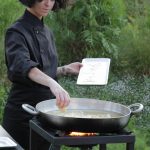
C’era una volta un fritto cattivo. Ma cattivo forte. Di quelli che l’unto dai vestiti non lo levi più.
Di quelli fritti e rifritti, che prima di digerirli arriva Natale e te li risogni per tre giorni.
Gli sposi erano disperati: alla festa del loro matrimonio quel fritto carogna imperversava e copriva tutti gli altri sapori.
Poi arrivarono le streghette di Kitchen Wishes e, danzando leggere, con un incantesimo e un po’ di acqua gassata lo spazzarono via.
Portarono al suo posto un fritto spumeggiante e croccante, fresco e leggero che colava arcobaleni e profumava di fiori. Un fritto che migliorava la digestione, invece di devastarla.
Gli sposi per la gioia decisero di sposarsi di nuovo entro un mese solo per fare un’altra festa. E, come da prassi, vissero tutti felici e contenti.
Lo sapevate che la frittura, se fatta nel modo giusto, è il metodo di cottura più leggero e più sano in assoluto? Il problema è che, purtroppo, in pochi friggono seguendo le regole della “frittura perfetta”… e il risultato è quel fritto infame della nostra favoletta iniziale.
Elena, friggitrice ufficiale di Kitchen Wishes, ci rivela gli ingredienti essenziali: ottimo olio di arachidi, acqua gassata (che dà spumosità) e farina. Nient’altro.
In questo modo si può friggere tutto, anche se Elena predilige i fiori di acacia, rosmarino e borragine, le foglie di salvia e le verdure di ogni tipo.
Ma c’è un ultimo ingrediente, fondamentale: il tempo.
Per ottenere un fritto buono e leggero il tempo è sacro.
Ma attendere può essere noioso… e allora?
Quando non puoi affrontare un problema direttamente, dicono i cinesi, devi diventare come l’acqua: scivolare intorno all’ostacolo.
La frittura avviene sul momento, è un evento live, come un concerto, una performance.
Il tempo in questo modo non è più un fastidio da evitare: cambia senso, diventa parte della scenografia della festa.
Il tempo è sacro, come abbiamo detto. E in ogni antica cultura gli eventi sacri sono legati alla divinità, e a un atto creativo.
Così, abbiamo ribattezzato la nostra Elena “dea del fritto”, sacerdotessa di un rituale complesso: la creazione del fritto perfetto.
Quella leggera, digeribile, spumosa meraviglia che dicevamo all’inizio.
Once Upon a Time, There Was a Wicked Fry
A truly wicked one.
The kind of fried food whose grease clings to your clothes forever.
The kind that’s fried, re-fried, and so heavy you’re still dreaming about it three days later — and it’s Christmas before you’ve digested it.
The bride and groom were desperate.
At their wedding, that evil, greasy fry had taken over, smothering every other flavor.
Then the little witches of Kitchen Wishes arrived.
Dancing lightly, they cast a spell — and with a touch of sparkling water, they banished the wicked fry for good.
In its place came a magical, crisp, and airy fry — bubbling with light, scented with flowers, dripping rainbows.
A fry so fresh it aided digestion instead of destroying it.
The newlyweds were so thrilled that they decided to get married again within a month, just to have another party.
And, as tradition goes, they all lived happily ever after.
Did you know that frying — if done properly — is actually one of the lightest and healthiest cooking methods?
The problem is, very few people follow the rules of “perfect frying”.
And that’s how we end up with the infamous fry from our little fairy tale.
Elena, Kitchen Wishes’ official frying goddess, reveals the essential ingredients:
excellent peanut oil, sparkling water (for that bubbly lightness), and flour.
Nothing else.
With this simple magic, you can fry almost anything — though Elena has a soft spot for acacia blossoms, rosemary and borage flowers, sage leaves, and all kinds of vegetables.
But there’s one last ingredient — the most important of all: time.
The Sacred Art of Frying
To achieve a light, delicious fry, time is sacred.
But waiting can be boring… so what then?
When you can’t face a problem head-on, the Chinese say, be like water — flow around the obstacle.
That’s why frying, for us, happens live — it’s a performance, a concert, an event in itself.
Time, then, is no longer a nuisance to avoid — it becomes part of the celebration’s scenography.
Time is sacred, as we said.
And in every ancient culture, sacred events are tied to divinity — to a creative act.
That’s why we’ve crowned our Elena the The frying goddess — the high priestess of a complex ritual: the creation of the perfect fry.
That light, digestible, bubbly wonder we mentioned at the start.


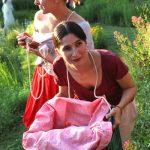
Unidentified flying objects: the canapé that took off!
È un uccello? È un aereo? No! È una tartina.
Nel mondo di Kitchen Wishes non solo i pennuti e i quadrimotori volano: vola un po’ tutto.
In particolare le tartine.
Sono aerodinamiche, eleganti, affusolate: perfette per librarsi in cielo.
Purtroppo, però, la forza di gravità non aiuta: come aiutarle a volare?
Ancora una volta è necessario coinvolgere il nostro corpo di ballo personale, le nostre
cameriere/ballerine/performer: una munita di sac-a-poche contenete la salsa, l’altra pronta con il
pane. La tartina nasce proprio davanti alla bocca dell’ospite, che, con fiducia infantile, dovrà farsi
imboccare da queste due sconosciute danzanti.
Vien da chiedersi: a che pro?
Non era meglio ricevere la tartina in modo tradizionale su un bel vassoio d’argento, già decorata e
golosa?
Lo schema classico prevederebbe una cameriera impettita, elegante che propone la tartina (in questo
caso: pane tostato, mousse di melanzane, pomodori confit e fiori di cappero).
Risultato: l’ospite prende la tartina.
La nostra versione propone lo stesso lieto fine, ma con modalità differenti: una cameriera ha il sac-
a-poche in spalla, che contiene la salsa di melanzane, capperi e pomodorini. L’altra porta con sé una
cassetta di pane tostato. Si presentano davanti all’ospite, s’inchinano, una porge il pane, l’altra versa
la salsa. L’ospite chiude gli occhi, si affida, viene imboccato.
Embè? Che cosa è cambiato?
La differenza è minima: la degustazione della tartina arriva dopo un piccolo ma essenziale gesto
creativo.
Dal punto di vista del commensale, vederla nascere sotto i suoi occhi, affidarsi, essere imboccato,
sono tutti valori aggiunti rispetto al semplice gesto di mangiare.
Piccoli preliminari che danno importanza al punto d’arrivo (come ogni preliminare che si rispetti…).
Una tartina può essere servita su un vassoio o saltando la corda, con un inchino settecentesco o a
testa in giù: rimane sempre una tartina, ma cambia significato, coinvolgendo altre parti della mente.
Se pensate che sia meglio pescarla da un vassoio, senza essere coinvolti nelle nostre curiose
coreografie, non sarà certo una tartina volante a farvi cambiare idea… ma noi siamo convinti che sia
bellissimo essere imboccati (quante volte succede nella vita, dopo lo svezzamento?), che sia
stimolante veder nascere sul momento ciò che stiamo per mangiare, che una tartina volante sia più
saporita di una tartina statica.
Eravamo bambini, e una mano grande, adulta, brandiva il boccone, mentre una voce raccontava una
piccola storia… ne ricordo alcune: “Piazza bella piazza, ci sta una lepre pazza…”. Oppure: “Arriva un bastimento carico di…”. O ancora “Vola vola vola…”.
Lo scopo era sempre quello di imboccarci, trasformando il pasto in un gioco.
La nostra tartina volante prova a farvi tornare in quel posto magico, ormai lontano nel tempo, in cui
Babbo Natale è una certezza, gli Ufo sono compagni di strada e c’è una pentola d’oro in fondo a
ogni arcobaleno.
Provateci anche voi, imboccatevi a vicenda, sporcatevi di salsa. Tornate bambini, per una volta.
La scuola di magia di Harry Potter esiste davvero, e accetta iscrizioni.
La Befana vien di notte con le scarpe tutte rotte.
Anche una tartina può volare.
In fondo, è tutto qui.
Is it a bird?
Is it a plane?
No! It’s… a canapé.
In the world of Kitchen Wishes, not only birds and airplanes take flight — pretty much everything does.
Especially canapés.
They’re aerodynamic, elegant, streamlined — perfect for gliding through the sky.
Unfortunately, gravity doesn’t help much.
So… how do we make them fly?
Once again, we call upon our personal dance troupe — our waitresses / dancers / performers.
One armed with a pastry bag filled with sauce, the other ready with the bread.
Together, they create the canapé right in front of the guest’s mouth — who, with childlike trust, must let these two dancing strangers feed them.
You might wonder: what’s the point?
Wouldn’t it be better to receive the canapé the traditional way — beautifully plated on a silver tray, ready to eat?
In the classic setup, an elegant, composed waitress presents the canapé:
toasted bread with eggplant mousse, confit tomatoes, and caper blossoms.
Result: the guest takes the canapé.
Our version has the same happy ending — but through a very different path.
One waitress carries the pastry bag filled with eggplant sauce, capers, and cherry tomatoes.
The other has a crate of toasted bread.
They approach the guest, bow gracefully — one offers the bread, the other pours the sauce.
The guest closes their eyes, surrenders, and is gently fed.
So… what’s changed?
The difference is small — yet essential: the tasting comes after a tiny creative ritual.
From the guest’s perspective, watching it come to life before their eyes — trusting, being fed — adds layers of meaning to a simple bite.
Little rituals that elevate the destination (as all good rituals do…).
A canapé can be served on a tray or while jumping rope, with a courtly bow or upside down — it will always be a canapé, but its meaning changes. It engages other parts of the mind.
And if you think it’s better to pick it off a tray, untouched by our peculiar choreography — well, a flying canapé won’t convince you otherwise.
But we still believe it’s wonderful to be fed — how often does that happen after infancy?
It’s thrilling to watch something you’re about to eat come to life, and we swear a flying canapé tastes better than a static one.
We were children once — a large hand held out the spoon, and a voice told a little story:
“Pretty square, pretty square, where the crazy hare lives…”
Or: “Here comes a ship full of…”
Or maybe: “Fly, fly, fly…”
The goal was always the same — to feed us, turning mealtime into play.
Our Flying Canapé tries to take you back to that magical place, long lost in time —
where Santa Claus is a certainty, UFOs are your travel companions,
and there’s a pot of gold at the end of every rainbow.
Try it yourself — feed each other, get messy with sauce.
Be children again, just for a while.
Hogwarts is real, and enrollment is open.
The Befana still flies at night in her broken shoes.
And yes — even a canapé can fly.
In the end, that’s really all there is to it.
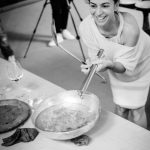
Elena, quando cucina, danza. Forse nemmeno se ne accorge, ma ondeggia, le mani seguono linee sinuose al ritmo di qualcosa di vagamente orientale, che sembra sentire solo lei. A volte, addirittura, chiude gli occhi, sembra colpita da un vento interiore. Capisce qual’ è la sua strada durante una vacanza di Natale in cui si ritira in una casa di montagna con l’idea di rimanerci solo per un weekend. Alla fine si trattiene per più di venti giorni, dedicati a fare solamente ciò che desidera. In quei venti giorni cucina ininterrottamente. Le è sempre piaciuto, fin da bambina, giocare con gli ingredienti… del resto, la cucina ha molto a che fare con ciò che ama di più: contatto, manualità, socialità. Da quella sorta di fuga in se stessa torna con un’idea precisa. Si butta anima e corpo nella sua nuova passione, presto diventa cuoca a domicilio, continuando poi in alberghi, locali, ristoranti e scuole di cucina Durante un evento incontra Giulia, e si piacciono subito. L’occasione per lavorare insieme arriva la prima volta che Elena deve organizzare un matrimonio. È il momento di far incastrare i due ingranaggi. Già si intuivano fatte l’una per l’altra. Nasce Kitchen Wishes Le due cuoche si dividono il ruolo sulla base di cosa ognuna ama fare, senza competizione. Elena preferisce gusti più decisi, piccanti, sapidi, Giulia è più delicata.Si ascoltano e, quando serve, sono una cosa sola. Fuori dalla cucina Elena continua la sua ricerca di contatto e socializzazione, condivisione e socialità. La parola chiave di Elena è proprio questa: contatto.
Quando parli con lei torna fuori continuamente, è il baricentro della sua visione della vita.
Ama stare immersa nella natura, cucinare, giocare, stare con gli amici che sono un po’ la sua famiglia allargata. Ama mangiare, bere, abbracciare, donare, ascoltare. “La mia idea di gioco è molto seria: non prevede la vittoria, ma solo liberare tutti insieme la fantasia, la creazione, toccare le cose, colorare, sporcarsi. Fantasticare è parte della magia della cucina, oltre che della mia vita.
La cucina è libertà interiore, canto, ballo, condivisione”.
Elena: When She Cooks, She Dances
When Elena cooks, she dances.
She might not even realize it — but her body sways, her hands trace gentle, sinuous lines, following the rhythm of something vaguely oriental that only she seems to hear.
Sometimes she even closes her eyes, as if carried by an inner wind.
She discovered her path during a Christmas holiday, when she escaped to a mountain house planning to stay just for the weekend.
She ended up remaining for more than twenty days — twenty days devoted entirely to doing what she truly wanted.
And during those twenty days, she cooked without stopping.
She had always loved it, ever since she was a child — playing with ingredients, touching, mixing, transforming them.
After all, cooking brings together everything she loves most: contact, craftsmanship, connection.
When she returned from that journey into herself, she came back with a clear idea.
She threw herself into her new passion completely — body and soul.
Soon she became a private chef, then went on to work in hotels, restaurants, local venues, and cooking schools.
At an event, she met Giulia — and they instantly clicked.
Their first chance to work together came when Elena had to organize a wedding.
It was time to see if their gears could fit.
They could — perfectly.
That’s how Kitchen Wishes was born.
The two chefs divided their roles naturally, following what each loved most — without competition.
Elena leans toward bold, spicy, savory flavors; Giulia prefers delicate notes.
They listen to each other, and when needed, they move as one.
Outside the kitchen, Elena continues her search for contact, connection, and community.
Her key word — the one she returns to constantly — is contact.
It’s the center of gravity of her entire vision of life.
She loves being surrounded by nature, cooking, playing, spending time with friends — her extended family.
She loves eating, drinking, hugging, giving, listening.
“My idea of play is very serious,” she says.
“It doesn’t involve winning — only freeing our creativity together, touching things, coloring, getting messy.
Imagination is part of the magic of cooking — and of my life.
Cooking is inner freedom, song, dance, and sharing.”

“Amo immortalare attimi da ricordare, sguardi e momenti spontanei”
Il catering contemporaneo di Kitchen Wishes è, certo, soprattutto legato al mondo della cucina, ma è anche altro, come sanno bene tutti quelli che ci conoscono già.Da tempo cerchiamo di realizzare eventi che coinvolgano tutti i sensi e mescolino linguaggi artistici differenti. Per noi Kitchen Wishes è collaborazione, incontro di creatività, scambio.Dallo scenografo al fotografo, dall’artista multimediale al musicista, il “gruppo Kitchen Wishes” si è ampliato sempre di più per offrire emozioni sempre nuove.Oggi parliamo con Gabriele Bellesi, amico e collaboratore di Kitchen Wishes per quanto riguarda la fotografia. Cominciamo con la più ovvia delle domande: come sei diventato fotografo? Fin da piccolo ho manifestato la mia creatività nel disegno a mano libera, ho sempre amato disegnare e il mio sogno sarebbe stato diventare fumettista. Una passione che è stata messa (per il momento, almeno) da parte quando ho scoperto la macchina fotografica. Non mi definisco un fotografo di quelli troppo creativi: non amo molto le fotografie troppo lontane dalla realtà, frequenti soprattutto oggi, grazie alle infinite potenzialità di fotoritocco. Preferisco un tipo di fotografia realista: amo immortalare attimi da ricordare, sguardi e momenti spontanei, dove ognuno si può ritrovare e rispecchiare. Diciamo che il mio approccio artistico prevede una maggior vicinanza al realismo, al reportage, che all’astrattismo. Quindi la creatività nel mio lavoro si realizza prevalentemente nelle inquadrature, che cerco di rendere non scontate: non amo le foto di posa. Domanda a bruciapelo: cos’è un creativo?Il creativo è colui che esprime se stesso attraverso la sua arte, con la quale crea un legame con gli altri. Come hai cominciato a lavorare con Kitchen Wishes?L’esperienza con KW nasce da lontano, Giulia e Giulio li conosco dai tempi delle scuole. L’evento che mi ricordo con più affetto è il mio primo matrimonio come fotografo, in una bellissima villa del Chianti con fuochi d’artificio finali. In quell’occasione un’invitata tedesca mi ha corteggiato dall’inizio alla fine della giornata, ma naturalmente non mi sono concesso: la mia super professionalità non mi ha permesso di approfittare del fascino del fotografo! Facciamo finta di crederti :-)… e passiamo alla prossima domanda: cosa nell’approccio di Kitchen Wishes al catering ti ha stimolato?Mi sono innamorato del bellissimo approccio sensoriale di Kitchen Wishes, che mi ha invogliato a crescere e a cimentarmi in generi fotografici che non conoscevo, che mi sono serviti per aumentare il mio bagaglio tecnico. Ogni evento di Kitchen Wishes è una nuova sfida a migliorare e un’occasione per entrare in empatia con persone nuove. Per concludere, mi piacerebbe sapere le tue influenze, i tuoi fotografi di riferimento.La passione per la fotografia è legata a due persone importanti della mia vita: Maurizio, un fotografo attivo negli anni ’70 e ’80, che mi ha dato l’input a prendere la macchina fotografica in mano, e Andrea, che ritengo un po’ il mio guru e motivatore: la sua passione sconfinata per la fotografia mi ha dato una grande forza. Per quanto riguarda i miei fotografi di riferimento, ce ne sono molti: Michael Kenna per la sua luce unica, Steve Curry per i suoi colori e i suoi viaggi, Sebastiao Salgado per la sua passione per la natura e per la Madre Terra, Robert Capa per una sua massima: “Se le tue foto non sono buone vuol dire che non sei abbastanza vicino al soggetto”. Nel caso di Capa, lui vicino al soggetto c’è stato davvero: era, per esempio, insieme ai militari durante lo sbarco in Normandia. Per questa intervista hai scelto una bellissima foto in bianco e nero di Giulia ed Elena: cosa hai cercato di trasmettere con questo scatto?Con Kitchen Wishes ho scattato un sacco di foto, ma questa è una di quelle a cui sono più legato, perché esprime tutta la creatività e l’alchimia delle due chef, giocando con le loro silhouette controluce. Grazie, Gabriele, e buon lavoro da tutti noi di Kitchen Wishes!
“I Love Capturing Moments to Remember — Glances and Spontaneous Instants.”
The contemporary catering of Kitchen Wishes is, of course, deeply tied to the world of food —
but as everyone who knows us well can tell, it’s also much more.
For years, we’ve been creating events that engage all the senses and blend different artistic languages.
For us, Kitchen Wishes means collaboration, creative exchange, and the meeting of minds.
From set designers to photographers, multimedia artists to musicians,
the Kitchen Wishes collective has grown over time —
always expanding to offer new emotions and perspectives.
Today we’re talking with Gabriele Bellesi, friend and collaborator of Kitchen Wishes,
and the creative eye behind many of our photographs.
How did you become a photographer?
“Ever since I was little, I’ve expressed my creativity through freehand drawing.
I’ve always loved to draw — my dream was to become a comic book artist.
That passion was set aside (for now, at least) when I discovered the camera.”
“I don’t consider myself an overly ‘creative’ photographer.
I’m not fond of images that stray too far from reality —
something very common today with all the possibilities of photo editing.
I prefer a realist approach: I love capturing moments to remember,
glances and spontaneous gestures — frames in which everyone can see a piece of themselves.”
“Artistically, I’m closer to realism and reportage than to abstraction.
So creativity, for me, lives mostly in the framing —
I try to make it unexpected. I don’t like posed photos.”
Quick question: what is a “creative”?
“A creative person is someone who expresses themselves through their art —
and through it, builds a connection with others.”
How did you start working with Kitchen Wishes?
“My collaboration with KW goes way back —
I’ve known Giulia and Giulio since school.
The event I remember most fondly was my first wedding as a photographer,
in a beautiful villa in Chianti, ending with fireworks.”
“That day, a German guest flirted with me from morning to night —
but of course, I didn’t give in.
My professional integrity kept me from taking advantage of the photographer’s charm!”
(We’ll pretend to believe that one…)
What inspired you about Kitchen Wishes’ approach to catering?
“I fell in love with their beautiful sensorial approach.
It encouraged me to grow and to explore types of photography I hadn’t tried before —
experiences that expanded my technical skills.”
“Every Kitchen Wishes event is a new challenge —
a chance to improve and to connect empathetically with new people.”
Who are your influences or favorite photographers?
“My love for photography is linked to two important people in my life:
Maurizio, a photographer from the ’70s and ’80s who first inspired me to pick up a camera,
and Andrea, whom I see as a mentor and motivator —
his boundless passion for photography has been a constant source of energy.”
“As for famous photographers, I have many references:
Michael Kenna for his unique light,
Steve McCurry for his colors and journeys,
Sebastião Salgado for his love of nature and Mother Earth,
and Robert Capa for his famous line:
‘If your pictures aren’t good enough, you’re not close enough.’
And Capa really was close —
he was right there with the soldiers during the Normandy landings.”
For this interview, you chose a beautiful black-and-white portrait of Giulia and Elena.
What were you hoping to capture in that shot?
“I’ve taken many photos for Kitchen Wishes, but this one means a lot to me.
It captures all the creativity and chemistry between the two chefs —
playing with their silhouettes against the light.”
Thank you, Gabriele, and happy shooting from all of us at Kitchen Wishes!
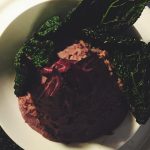
L’omaggio di Kitchen Wishes a una vita di arte e bellezza David Bowie non è più. La notizia ha colto noi, come tutto il resto del mondo, di sorpresa. Per molti di Kitchen Wishes, il Duca Bianco non era solo un grande musicista. Bowie era una sorta di cartello indicatore, una pagina strappata dal libretto di istruzioni dell’esistenza. L’incarnazione della possibilità. Bowie ha insegnato al mondo che trasformare le proprie emozioni in opere d’arte non è solo possibile, è anche necessario. Ha raccontato le infinite possibilità di inventare mondi che prima non c’erano. Ha usato il pensiero laterale, la pittura, la musica, il cinema, il teatro per creare una forma artistica totale e, nel far questo, ha usato una tavolozza multicolore e infinita: il suo personale sguardo sul mondo. Un concetto di vita come arte che si applica infatti a ogni tipo di passione, a ogni tipo di creatività, a ogni tipo di desiderio: nel nostro caso, per esempio, alla cucina e in particolare alla ricerca di un modo sempre innovativo e curioso di pensare al catering, al wedding planning, all’invenzione legata al cibo. L’idea di inventare una ricetta per ringraziare il Duca è venuta di conseguenza: da appassionati fan, abbiamo voluto usare la nostra passione per ricordarlo, creando una piccola cosa nuova.Qualcosa che prima non c’era. Per noi è il modo giusto per salutarlo, perché, semplicemente, è il nostro modo. La ricetta che vi regaliamo si chiama “Risotto Stella Nera” ed è nato dall’immersione nell’ascolto dell’ultimo, estremo epitaffio di Bowie, il recentissimo “Blackstar”. Un disco complesso, cupo e profondo, dai colori scuri, creato come saluto al mondo dalla stella delle stelle, la più brillante che abbia mai solcato il cielo della musica contemporanea. Risotto “Stella Nera” Ingredienti: 300 grammi di Riso Vialone nano 2 Porri 2 2 carote viola 2 Mazzi di cavolo nero 60 grammi di burro di capra 200 grammi di fagioli cannellini Peperoncino Ginger Cardamomo Sale Preparazione: Spinare il cavolo nero. Mettere le coste del cavolo in acqua fredda con un pezzettino di ginger, cardamono, una carota viola e parte verde del porro. Far bollire per un’ora. Cuocere a vapore meta delle foglie di cavolo intere, tritare le altre e cuocerle a fuoco lento con peperoncino e burro di capra. Frullare il cavolo cotto nel burro e riporre in frigo per mezz’ora in modo che il burro si rapprenda. Insaporire i fagioli in padella con soffritto di porro e pezzetini di mezza carota , allungare con un mestolo di brodo di cavolo. Frullare. Tostare bene il riso in una padella con soffritto di porro, sfumare con vino rosso (preferibilmente Dolcetto) portare a cottura con il brodo di cavolo nero e carote viola. Disporre sul piatto le foglie intere di cavolo, porci sopra la crema di cannellini e stratificare il riso bollente con il burro di cavolo nero (sara la sua mantecatura mentre lo mangi). Decorare con carote viola crude tagliate/taglienti sul cima del piatto, che guardano il cielo. Degustare unitamente all’ascolto di “Blackstar”. Una breve spiegazione: Il cavolo nero ha un sapore pungente e profondo, come la sensazione di introspezione quasi dolorosa di “Blackstar”. L’uso del ginger e del cardamomo richiama alle spezie musicali orientali che pervadono il brano omonimo. Le carote viola per il colore, che spiazza e contrasta con con la percezione gustativa: un omaggio alla ricerca costante di soluzioni spiazzanti dell’opera bowiana. Il sapore denso del cavolo si nasconde all’interno, per suggerire una degustazione stratificata, che cresce a ogni assaggio. Nel caso di “Blackstar”, a ogni ascolto. L’impiattamento segue l’estro interiore in modo non canonico, sfuggendo dalle modalità più usuali. L’utilizzo di alcuni ingredienti tipicamente toscani (cannellini, cavolo nero) è una concessione, lo ammettiamo, un po’campanilista all’amore che David Bowie aveva per Firenze e per la Toscana: qui ha debuttato con il suo primo tour italiano, il “Glass Spider” del 1987, qui (alla Leopolda) ha esposto le sue opere d’arte. Qui, soprattutto, si è sposato.
Kitchen Wishes’ Tribute to a Life of Art and Beauty
David Bowie is no more.
The news took us — like the rest of the world — by surprise.
For many of us at Kitchen Wishes, the White Duke wasn’t just a great musician.
Bowie was a signpost, a torn-out page from the handbook of existence.
The embodiment of possibility.
He taught the world that turning emotions into art isn’t only possible — it’s necessary.
He showed us the infinite ways we can invent worlds that didn’t exist before.
Bowie used lateral thinking, painting, music, cinema, and theatre to create a total work of art — and in doing so, he painted with an endless, multicolored palette: his own unique gaze on the world.
That concept of life as art applies to every passion, every act of creativity, every form of desire —
in our case, to the kitchen, and in particular to our constant search for new, curious ways of thinking about catering, wedding planning, and the invention that comes from food.
So the idea of creating a recipe to thank the Duke came naturally.
As devoted fans, we wanted to use our craft to remember him — by creating something new.
Something that didn’t exist before.
For us, that felt like the right way to say goodbye —
because, quite simply, it’s our way.
The Recipe: “Black Star Risotto”
This dish was born while listening — deeply — to Bowie’s final, magnificent farewell:
his latest album, Blackstar.
A complex, dark, and profound record, painted in deep shades —
a farewell to the world from the brightest star ever to cross the sky of contemporary music.
Black Star Risotto
Ingredients
- 300 g Vialone Nano rice
- 2 leeks
- 2 purple carrots
- 2 bunches of Tuscan black kale (cavolo nero)
- 60 g goat butter
- 200 g cannellini beans
- Chili pepper
- Ginger
- Cardamom
- Salt
Preparation
Remove the stems from the black kale.
Place the stems in cold water with a small piece of ginger, a cardamom pod, one purple carrot, and the green tops of the leeks.
Boil for one hour.
Steam half of the kale leaves whole; finely chop the rest and cook them slowly with chili and goat butter.
Blend the cooked kale and chill for half an hour to let the butter firm up.
Sauté the cannellini beans with leek and small pieces of the remaining carrot; add a ladle of kale broth and blend until creamy.
Toast the rice well in a pan with leek sauté, deglaze with red wine (preferably Dolcetto), and cook with the kale and carrot broth.
To serve, place the whole kale leaves on the plate, add the cannellini cream, and layer the hot rice on top with the kale-butter mixture — it will melt into the risotto as you eat, creating a natural “mantecatura.”
Decorate with thin, raw slices of purple carrot — sharp and pointed, reaching toward the sky.
Enjoy while listening to Blackstar.
A Few Notes
Black kale has a deep, pungent flavor —
like the almost painful introspection of Blackstar.
Ginger and cardamom recall the oriental musical spices woven throughout the title track.
The purple carrots — their color unexpected and contrasting — pay homage to Bowie’s constant search for surprising, disorienting combinations.
The dense flavor of the kale is hidden within, suggesting a layered tasting experience that evolves with every bite —
just as Blackstar reveals something new with every listen.
The plating follows inner inspiration rather than convention — escaping the usual presentation rules.
Using some typically Tuscan ingredients (cannellini beans, black kale) is, we admit,
a small campanilistic tribute to Bowie’s love for Florence and Tuscany —
where he debuted his first Italian tour, The Glass Spider (1987);
where he exhibited his art at the Stazione Leopolda;
and where, most of all, he was married.

Le serate “blind”: un’esperienza multisensoriale da non perdere!
Kitchen Wishes ormai da qualche anno ha scommesso su un tipo di esperienza del tutto speciale.
Una scommessa azzardata: un’ esperienza “blind”, in cui tutti i commensali sono bendati.
Per una volta, la vista, il più usato dei nostri sensi, farà un passo indietro.
Saranno l’udito, l’olfatto e il tatto a rivelare i segreti del cibo… naturalmente, in compagnia del gusto!
Riscoprire sensi dimenticati
Le cene bendate di Kitchen Wishes sono un salto nel vuoto di una dimensione sconosciuta, imprevista. Aiutano a scoprire percezioni mai considerate, abbandonando la routine delle abiutidini.
Scoprirete che anche i sapori cambiano, se non potete usufruire della vista e dovete concentrarvi su altre sensazioni.
Vi lanceremo fuochi d’artificio sonori, tattili e olfattivi che vi circonderanno come lampi di colore, a completare l’esperienza degustativa.
La cena bendata apre le finestre della mente, permettendovi anche un nuovo, inedito modo di approcciarvi agli altri commensali, liberi dai pregiudizi dello sguardo, spesso giudicante.
Quante volte “giudichiamo” le persone dal loro abbigliamento, con superficialità? Una cena bendata crea vicinanza e fa scomparire barriere e stereotipi, oltre a regalare un momento condiviso e squisito.
Il racconto di chi c’è stato
Ma lasciamo la parola ai commensali che hanno vissuto alcune delle cene precedenti:
“Per noi, che per l’occasione eravamo ciechi, è stato bello dimenticare il senso più usato nella vita di tutti i giorni, assaporando gli odori (intorno a noi rotolavano padelle sfrigolanti, i camerieri ci passavano erbe aromatiche sotto il naso), i rumori (suono di pentole, tintinnare di bicchieri) e, soprattutto, le sensazioni tattili (immergere le mani nel piatto, scoprire consistenze impreviste)” (Katia)
“Forse, più di tutto, la sensazione più bella è stata scoprire l’altro di fronte a noi.
Persone mai viste, ma complici. Persone che sono diventate subite alleate, senza guardarne il volto, l’espressione, l’abbigliamento. Fuori da ogni pregiudizio, siamo diventati tutti compagni di strada. Nessun telefonino, nessun selfie, le chiacchiere si sono fatte da subito intime, senza paura del giudizio. Abbiamo scoperto che gli occhi giudicano molto più degli altri sensi: se li escludi, apprezzi il tuo prossimo molto di più” (Michele).
Un’esperienza da ricordare
Naturalmente, la star rimane quello che viene messo in tavola. Piatti scelti proprio per dare sensazioni particolari in questa modalità unica.
Piatti con consistenze e formati adatti a essere degustati senza l’aiuto dello sguardo.
Senza parlare del dessert, che in queste occasioni è improvviso, imprevisto e sorprendente… ma non faremo spoiler!
Alla fine, quando la vista ritorna padrona, c’è sempre chi quasi se ne dispiace, e vorrebbe continuare ancora il gioco: gli altri sensi si liberano, respirano, senza più la “tirannia” dello sguardo… e, dopo un primo istante di spaesamento, è una sensazione straordinaria.
La cena bendata di Kitchen Wishes è un’esperienza multisensoriale, un nuovo modo di percepire il mondo, gli altri e, ovviamente… un’ottima cena. Mica male, per una serata tra amici!
Contattateci per organizzare la vostra cena bendata
Blind Dinners: A Multisensory Experience You Don’t Want to Miss!
For the past few years, Kitchen Wishes has been betting on a truly special kind of experience.
A bold one: a blind dinner — where every guest is blindfolded.
For once, sight — the sense we rely on most — takes a step back.
Hearing, smell, and touch become the guides that reveal the secrets of food… naturally, in the company of taste.
Rediscovering Forgotten Senses
A blind dinner with Kitchen Wishes is a leap into the unknown —
a plunge into an unexpected, unfamiliar dimension.
It helps you uncover perceptions you may have never noticed,
letting go of the comfort of routine and habit.
You’ll discover that even flavors change when you can’t rely on your eyes,
and have to focus on other sensations.
We’ll surround you with a fireworks display of sound, scent, and texture —
bursts of color that complete the tasting experience.
Seeing Without Seeing
Our blind dinners open new windows in the mind,
allowing you to connect with the people around you in a fresh, unfiltered way —
free from the judgments of sight.
How often do we form opinions based on someone’s clothing or appearance?
At a blind dinner, barriers and stereotypes fade away,
leaving room for real closeness — and a shared, delicious moment.
Voices from the Table
But let’s hear from some of the guests who’ve experienced it firsthand:
“For us, blind for the evening, it was wonderful to forget the sense we use most every day —
to savor the smells (pans sizzling around us, servers waving herbs under our noses),
the sounds (the clang of pots, the clinking of glasses),
and, above all, the tactile sensations —
plunging our hands into the plate, discovering unexpected textures.”
(Katia)
“Maybe the best part was discovering the person across from me.
Strangers who became instant allies —
without seeing their faces, expressions, or clothes.
Free from any judgment, we all became fellow travelers.
No phones, no selfies — the conversations turned intimate right away, without fear.
We realized that eyes judge far more than the other senses;
when you close them, you start to truly appreciate the people beside you.”
(Michele)
An Experience to Remember
Of course, the star of the evening remains what’s on the table.
Each dish is chosen specifically for its textures and sensations,
designed to be enjoyed without the help of sight.
And dessert?
Always unexpected, surprising — and we won’t spoil it for you!
By the end of the dinner, when sight returns,
there’s always someone who almost wishes it hadn’t.
Without the “tyranny” of vision, the other senses breathe —
and after that first moment of disorientation,
it feels extraordinary.
A Dinner That Awakens Every Sense
A Kitchen Wishes Blind Dinner is more than a meal —
it’s a multisensory experience,
a new way to perceive the world, others,
and of course… an unforgettable dinner.
Not bad for a night out with friends!
Get in touch to organize your own blind dinner —
and discover how powerful your senses can be when your eyes take a break.
Per Kitchen Wishes il cibo è una chiave per raggiungere emozioni profonde.
Per questo motivo, parlando di storia e memoria, non mi sto riferendo alla riscoperta di piatti medievali o rinascimentali, ma ai nostri ricordi personali. Alla nostra storia.
Ogni piatto che abbiamo mangiato nella vita ha attivato reti di pensieri, torri di ricordi, intere città
sensoriali: andare a ricercare quei particolari sapori e profumi ha il potere di un viaggio nel tempo e nello spazio.
Per esempio, lo ammetto, i miei ricordi culinari sono assai discutibili: da bambino amavo la mozzarella con lo zucchero (non di bufala, però, c’è un limite a tutto) e le cipolle cotte con la besciamella. Mi mancano da morire le “patate in garbo” (patate al vapore con alloro e aceto bianco),
ma solo perché mi manca mia nonna, e il ricordo di quando mi insegnò a cucinarle mi è particolarmente caro.
D’altro canto negli scaffali della mente dedicati ai miei incubi peggiori hanno un posto d’onore delle immonde tagliatelle ai fegatini di pollo che mia madre si ostinava a proporre a cadenze regolari nonostante gli sguardi d’odio di tutta la famiglia e, più terribile di tutti, il crostino di burro e aglio
crudo che (per oscuri motivi terapeutici) mi fu propinato varie volte al posto della colazione intorno
ai 12 anni con conseguenze sulla mia vita sociale che non farete certo fatica a immaginare.
Posso solo dirvi che il mio psicologo grazie a quei crostini probabilmente si è fatto lo yacht.
Come potete vedere, i piatti citati non sono roba da gourmet… del resto, non vi preoccupate, in Kitchen Wishes io sono quello che scrive, ai fornelli ci vanno Giulia ed Elena, che hanno, ve lo assicuro, memorie culinarie migliori.
Ma la “ricetta che non c’è” di oggi non è la mia personale, anche perché non credo possa piacere a nessun altro: è la mia storia, perbacco, mica la vostra.
For Kitchen Wishes, Food Is a Key to Deep Emotion
For Kitchen Wishes, food is a key — a way to unlock deep, hidden emotions.
That’s why, when I talk about history and memory, I’m not referring to the rediscovery of medieval or Renaissance recipes,
but to something much more personal: our own stories.
Every dish we’ve ever eaten has triggered networks of thoughts,
towers of memories, entire sensory cities.
To seek out those specific tastes and aromas
is to embark on a journey through time and space.
I’ll admit it — my own culinary memories are rather questionable.
As a child, I used to love mozzarella with sugar (not buffalo mozzarella, though — there are limits)
and onions baked with béchamel.
I miss my grandmother’s patate in garbo — steamed potatoes with bay leaf and white vinegar —
but, if I’m honest, it’s mostly because I miss her.
The memory of the day she taught me how to make them is especially dear to me.
On the other hand, in the darker corners of my mental pantry
lie some of my worst nightmares:
the revolting chicken liver tagliatelle my mother insisted on serving at regular intervals,
despite the family’s collective looks of despair —
and worst of all, the infamous butter-and-raw-garlic crostini
that, for mysterious “therapeutic” reasons,
I was forced to eat for breakfast around age twelve.
The social consequences, as you can imagine, were catastrophic.
Let’s just say my therapist probably owes his yacht to those garlic toasts.
As you can see, none of these dishes would exactly make a gourmet’s list.
But don’t worry — in Kitchen Wishes, I’m the one who writes.
At the stove you’ll find Giulia and Elena,
whose culinary memories, I assure you, are far better than mine.
Still, today’s “recipe that doesn’t exist” isn’t my own —
mainly because I doubt anyone else would enjoy it.
It’s my story, after all.
Not yours.
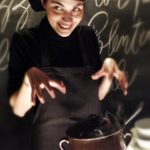
Il problema, quando parli con Giulia, è che ti porta in un sacco di posti interessanti… ma non sa come farti tornare a casa.
Diciamo che non ti fornisce il libretto delle istruzioni.
Si viaggia senza rete, su una sorta di giostra multicolore e solo apparentemente sconnessa.
Se vuoi conoscere la meta prima di partire, se hai bisogno di essere rassicurato, Giulia non è proprio la guida più adatta.
Con lei è necessario mollare gli ormeggi. Ma la sua casualità – ed è questa la vera sorpresa – ha del metodo.
Giulia è l’ideologa, la cuoca e l’organizzatrice di Kitchen Wishes.
Da un po’, è anche mamma.
La sua parola d’ordine? Accogliere.
Accogliere tutto quello che arriva, sempre, con uno scopo preciso: prenderlo, trasformarlo e restituirlo.
Ricevere è un atto creativo per realizzare qualcosa che prima non c’era
“La cucina è ricevere un ingrediente e trasformarlo: ricevo un dono per donarlo a mia volta.
Non tengo niente, non vedo l’ora di buttare fuori quello che ho realizzato per capire che cosa ne faranno gli altri.
La mia esistenza dipende dagli altri, nel senso che ho bisogno di fare cose per rimetterle in circolazione, diverse e “mie”.
La cucina, per Kitchen Wishers, è emozione da trasformare in colori e sapori, in sfogo e creatività.
Il limite è solo la propria bravura, ma tutti possono arrivarci, se hanno il tempo e la voglia di approfondire, di studiare.
Per Giulia la cucina è musica: il piatto ha suoni, ha ritmiche, è un intero concerto di cui lei è direttrice quasi suo malgrado.
Quando cucina vede piccole scintille di colore, le segue, un po’ come le scie aromatiche del film “Ratatouille.”
Quando è cominciata l’avventura Kitchen Wishes non pensava che avrebbe finito per coordinare uno staff numeroso. Pensava solo a creare un gioco bellissimo.
È andata a finire che in tanti l’hanno seguita, lasciandola suo malgrado al posto di comando.
Di Elena, la co-chef, dice che è la sua bilancia: quando un piatto sale, l’altro scende. Per questo si completano, perché nessuna delle due si sente la prima, e quindi la mente di entrambe rimane aperta.
Cerca di realizzare eventi in cui si attivano i neuroni giusti, si vibra, ci si perde senza sapere più che tempo è, che ore sono, che giorno è. Si vive il momento.
Per Giulia vivere nel presente significa vivere bene, fare le cose più che parlarne. Quando le chiedi dove vorrebbe portare Kitchen Wishes scuote la testa, quasi stizzita.
“Non penso a come sarà, ma ad essere come siamo. Gli obiettivi futuri sono noiosi”.
The problem, when you talk with Giulia,
is that she takes you to a thousand fascinating places…
but she never tells you how to get back home.
Let’s just say she doesn’t provide an instruction manual.
With her, you travel without a safety net —
on a kind of multicolored carousel that seems chaotic, but isn’t.
If you need to know the destination before you leave,
if you crave reassurance,
Giulia is probably not the guide for you.
With her, you have to cast off the ropes and set sail.
And yet, her apparent randomness —
that’s the real surprise —
has its own method.
Giulia is the ideologist, chef, and organizer behind Kitchen Wishes.
And lately, she’s also a mom.
Her motto? To welcome.
To welcome whatever comes — always —
with one clear purpose:
to take it, transform it, and give it back.
Receiving as a Creative Act
“Cooking is about receiving an ingredient and transforming it.
I receive a gift only to give it back in another form.
I keep nothing — I can’t wait to release what I’ve created
and see what others will do with it.
My existence depends on others,
in the sense that I need to make things and put them back into circulation —
transformed, but still mine.”
For the Kitchen Wishers, cooking is emotion turned into color and flavor,
into release and creativity.
The only limit is one’s own skill —
but anyone can get there, with time and curiosity.
For Giulia, cooking is music.
A dish has its own sound, its rhythm —
an entire symphony for which she is the conductor,
almost in spite of herself.
When she cooks, she sees sparks of color,
following them like the aromatic trails in Ratatouille.
When the Kitchen Wishes adventure began,
she never imagined she’d end up leading a whole team.
She only wanted to create a beautiful game.
But in the end, many followed her —
and she somehow found herself in command.
About Elena, her co-chef, she says:
“She’s my balance.
When one of us rises, the other grounds her.
That’s why we work — because neither of us feels like the ‘first,’
so both our minds stay open.”
Giulia dreams of creating events that awaken the right neurons,
where people vibrate, lose themselves,
forget what time or day it is —
and simply live the moment.
For her, living in the present is living well:
doing, rather than talking.
And when you ask her where she wants to take Kitchen Wishes,
she just shakes her head, almost annoyed.
“I don’t think about what it will become —
only about being who we are.
Future goals are boring.”
Il racconto dell’evento di Michele Mingrone: ospite e copy di Kitchen Wishes…
SOGNO DI UNA NOTTE D’INIZIO ESTATE
*
_“Vo per il folto della selva bruna, per rovi, orti e valloni,
vo tra fulmini e tuoni leggero come un raggio della luna,
a servir delle fate la regina;
ad imperlare di rorida brina i sentieri dov’ella s’incammina
insieme con le sue dame e donzelle; vo cercando le fresche campanelle
la cui veste leggera spira profumo già di primavera.
Vo cercando stelline di rugiada da appiccar con amore
come orecchini di pendula giada alla corolla aperta d’ogni fiore”_
(W.Shakespeare, Sogno di una notte di mezza estate, Atto II, Scena I)
Who says a dinner can’t become a dream?
Mi affaccio quasi timido all’ingresso del magnifico giardino dove si sta per tenere un evento tutto speciale: “Momenti”, una serata multisensoriale organizzata da un manipolo di pazzi visionari.
Sono i ragazzi di Kitchen Wishes, Giulia, Elena e Giulio, a fare da direttori d’orchestra di una sorta di Filarmonica di intrattenitori, cuochi, ballerini, artisti del cocktail, pittori, stilisti e musicisti, tutti uniti per trasformare un aperitivo in un momento di magia alchemica.
Chi non pensa in grande è destinato alla mediocrità, e Kitchen Wishes, luogo dell’anima popolato di maghi e streghette, di mediocre non ha proprio niente.
Così, mi avvicino all’ingresso del giardino, aspettando di essere stupito, nutrito, trasportato in un’altra dimensione. Un viaggio a tappe, come un labirinto in cui ogni angolo nasconde un premio speciale.
All’inizio del labirinto il primo assaggio è solo di acqua e pane.
Solo? Sono le basi, l’Alfa e l’Omega. Giusto che così cominci il viaggio.
Moderno Teseo in cerca di un gustoso Minotauro, vengo fatto accomodare su un comodo pouf en plein air da una fanciulla biancovestita, i lunghi capelli rosso fuoco.
Il primo assaggio è una saporita crema verde e speziata, unita a una bevanda dolce e rinfrescante, forse melissa.
Una musica eterea si diffonde nel giardino, e una ballerina si muove lenta nel sole che comincia a calare. Tutti i sensi sono sotto attacco, contemporaneamente.
La seconda tappa è rapida quanto imprevista, due ragazze giocano con la corda per saltare e, mentre passo, mi imboccano con un crostino saporito a base di melanzane.
Altri due crostini seguono, stessa base ma diverso modo di cucinarli, fino a una zona aperitivo sotto un portico di fiori, che offre un originale spritz aromatizzato al cetriolo.
Si va avanti, verso una zona dove un ragazzo-folletto taglia verdure e crea piccole opere d’arte con humus di ceci, salsa di barbabietole e verdure assortite. Qui c’è un buon vino rosso, e un cesto di focaccia servito da una ragazza misteriosa, seduta su una panchina in abiti dalla foggia antica.
La musica cambia a ogni tappa, seguendo l’onda emotiva del momento mentre, i ragazzi sparsi nei vari angoli del parco spiegano con amore le pietanze proposte.
Al centro del giardino un corpo di ballo elfico prepara delle crocchette di patate deliziose, danzando mentre il piatto si crea, passo dopo passo. Per gustarlo è necessario inginocchiarsi, ed è Giulia a porgere, maga nerovestita dai capelli color acquamarina, una sorta di comunione degustativa all’ospite.
Da alte torri metalliche si diffonde il rumore di coltelli che tagliano: anche i suoni della cucina diventano ritmo e magia: si arriva all’ultima zona, quella dove, uno a fianco all’altro, si esibiscono un maestro di cocktail e un artista della cucina.
I cocktail nascono sul momento: gli ospiti staccano foglie di piante aromatiche, timo, menta, basilico, dalla pianta e personalizzano così la propria bevanda.
La zona dedicata al piatto principale ha tre possibilità, una migliore dell’altra: vegan, vegetariana e onnivora. Il formato segue un’idea di street food, ma i sapori sono piccole esplosioni atomiche multicolori.
Le scelgo tutte e tre, passando da un clamoroso panino con angus, ricotta, pesto di rucola e agretti marinati a un tramezzino con senape, melanzane, pomodori e tanto altro, finendo con un crostone contenente un sublime contrasto di peperoni, formaggio e cioccolata fondente.
Intanto, un chitarrista in un angolo intrattiene il pubblico con arpeggi soffici e ritmi swing.
Cala la notte, e le ballerine-cuoche si illuminano, ricominciando lo spettacolo che porta alla nascita della crocchetta magica, mentre gli ospiti percorrono e ripercorrono il labirinto, assaggiando nuovamente tutto quanto, chiacchierando, rilassandosi su cuscini, materassi e coperte disposti nell’erba tagliata, tra i fiori del giardino. In un altro angolo della foresta magica, improvvisamente, si materializza un violinista a concludere il viaggio con un ultimo incantesimo.
Kitchen Wishes è tutto questo: desideri realizzati (Wishes), ma anche streghe della cucina (Witches) in grado di creare un incanto ipnotico, una sospensione della realtà, immergendomi per una sera in un vero sogno di una notte di inizio estate, in cui danzanti folletti, elfi lunari e fate cuciniere, appena usciti da una favola, sono pronti a deliziare i cinque sensi, con il sorriso di chi ama il proprio lavoro e cerca di stupirsi (e stupire) ogni giorno.
_”A tutti buonanotte dico intanto,
finito è lo spettacolo e l’incanto.
Signori, addio, batteteci le mani,
e Robin v’assicura che domani
migliorerà della sua parte il canto.”
_
(W.Shakespeare, Sogno di una notte di mezza estate, Atto V, Scena I)
Michele Mingrone
A Midsummer Night’s Dream
(The tale of an evening told by Michele Mingrone — guest and copywriter for Kitchen Wishes)
“Through bush, through briar, through flood, through fire,
I do wander everywhere,
Swifter than the moon’s sphere;
And I serve the Fairy Queen,
To dew her orbs upon the green…”
(W. Shakespeare, A Midsummer Night’s Dream, Act II, Scene I)
Who says a dinner can’t become a dream?
I arrive, almost shyly, at the entrance of a magnificent garden where something special is about to happen:
“Momenti”, a multisensory evening organized by a group of brilliant, visionary madmen.
They are the magicians of Kitchen Wishes — Giulia, Elena, and Giulio —
conducting a kind of symphony made up of entertainers, chefs, dancers, mixologists, painters, designers, and musicians,
all united in transforming an aperitif into a moment of alchemical magic.
Those who don’t dream big are destined for mediocrity — and Kitchen Wishes, a place of the soul populated by witches and wizards, is anything but mediocre.
So I step into the garden, ready to be surprised, nourished, and transported elsewhere —
on a journey in stages, like a labyrinth where every corner hides a small reward.
The Journey Begins
At the entrance to the labyrinth, the first taste is simple: water and bread.
Simple, yes — but also the Alpha and Omega.
A fitting way to begin the voyage.
Like a modern Theseus searching for a delicious Minotaur,
I’m invited to sit on a soft pouf en plein air by a young woman dressed in white, her hair blazing red in the sunset.
The first bite: a green, spicy cream paired with a sweet, refreshing drink — perhaps lemon balm.
Ethereal music drifts through the garden as a dancer moves slowly in the fading light.
Every sense is under gentle attack, all at once.
The second stop arrives quickly and playfully:
two girls skipping rope feed me a savory eggplant crostino as I pass.
Two more follow — same base, different preparation — leading me to a floral portico where a cucumber-infused spritz awaits.
Further on, a pixie-like boy slices vegetables, sculpting tiny edible artworks with chickpea hummus, beet sauce, and vibrant greens.
A mysterious woman in antique clothing offers a basket of focaccia and a glass of red wine.
At every stop, the music changes — following the emotional wave of the moment —
and the Kitchen Wishers scattered through the park lovingly explain their creations.
The Magic Grows
At the center of the garden, an elfin dance troupe prepares potato croquettes,
moving rhythmically as the dish takes form before our eyes.
To taste it, you must kneel — and it’s Giulia, dressed in black with aquamarine hair,
who offers it like a small, sacred communion.
From tall metallic towers, the sounds of knives slicing echo in the air —
even the noises of the kitchen become rhythm and ritual.
The final area is shared by a cocktail master and a culinary artist, side by side.
Guests pick their own herbs — thyme, mint, basil — to personalize their drinks,
mixing nature with invention.
The main course area offers three paths, each better than the last:
vegan, vegetarian, and omnivorous.
The format recalls street food, but the flavors —
tiny, colorful atomic explosions — are far from ordinary.
I choose all three:
a stunning Angus burger with ricotta, arugula pesto, and marinated agretti;
a sandwich with mustard, eggplant, and tomato;
and finally, a crostone of roasted peppers, cheese, and dark chocolate — a divine contrast.
Nearby, a guitarist fills the evening with soft arpeggios and swinging rhythms.
A Night Out of Time
As night falls, the dancer-chefs glow in the darkness,
recreating the spell of the “magic croquette,”
while guests wander again through the garden-labyrinth,
re-tasting, chatting, and relaxing on cushions and blankets spread over the grass,
among flowers and laughter.
In another corner of this enchanted forest,
a violinist suddenly appears —
a final incantation to close the night.
The Dream Made Real
Kitchen Wishes is all of this:
Wishes made real — but also Witches of the kitchen,
capable of conjuring a hypnotic enchantment,
a gentle suspension of reality.
For one midsummer night,
they transported me into a world of dancing sprites, moonlit elves, and culinary fairies —
beings straight out of a dream,
ready to delight all five senses with the smile of those who truly love what they do,
and who, every day, still seek to amaze — and be amazed.
“So good night unto you all.
Give me your hands, if we be friends,
And Robin shall restore amends.”
(W. Shakespeare, A Midsummer Night’s Dream, Act V, Scene I)


Svolgimento: uffa. Che noia, il millefoglie.
Il dolce più ovvio per ogni evento di grandi dimensioni, ma anche il più banale.
Giulia, maga madrina di Kitchen Wishes, interpellata, mi rivela che l’idea di fare un millefoglie del tutto diverso è nata proprio dal suo odio totale per questo dolce classico quanto insulso.
Ma lei non è una che si arrende all’ovvio: per questo il suo millefoglie, il millefoglie di Kitchen Wishes, è diventato qualcosa di completamente diverso.
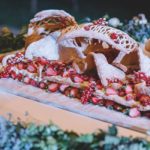
Si è trasformato in un delirio visionario, in un paesaggio fantastico.
Reti di sfoglia croccante hanno coperto la crema, nascondendo candele accese pronte a illuminare una sorta di cupola in fiamme. Sono nate grotte, montagne, stalattiti di sfoglia, laghetti di ribes e more, piccoli rotoli impazziti ricolmi di schegge di cioccolata irregolari e gustose.
Ecco i punti chiave della ricetta:
– Prima di tutto, il tempo: finita la realizzazione degli ingredienti, il nostro “mille e una sfoglia” si monta in mezz’ora. In questo modo può essere realizzato sul momento, immergendosi nelle
sensazioni della giornata, nel clima della festa.
– Il classico strato piatto in cima al dolce scompare, trasformandosi in una visione irripetibile, ogni volta diversa. Si gioca con le forme, i colori, si mettono in forno oggetti (pentole, ciotole, forchette, cucchiai) che, avvolti dalla sfoglia, creano paesaggi possibili. La sfoglia li abbraccia, si arrotola creando cupole, pinnacoli, piccoli presepi in miniatura.
– Creare il dolce sul momento permette di non renderlo molliccio: la sfoglia, non zuccherata, resta croccante e può essere decorata a piacere con decorazioni, frutta, scaglie di cioccolata.
– Chi crea il millefoglie taglia le fette personalmente: ogni fetta è diversa, è un paesaggio unico, e solo chi l’ha immaginata può tagliarla, azzeccando i piccoli, singoli paesaggi che ogni commensale troverà nel piatto.
In questo modo, il più classico dei dolci si è trasformato in un manifesto della filosofia di Kitchen
Wishes: un racconto fatto di dolci strati, testimone gustoso di un momento irripetibile.
RICETTA: MILLE E UNA SFOGLIA
Ingredienti per circa 20 persone
– 2 confezioni di pasta sfoglia rettangolare
– 1 confezione di pasta sfoglia rotonda
– 1 litro di latte
– 10 tuorli d’uovo
– 200 grammi di zucchero
– 25 grammi di farina di riso
– 20 grammi di fecola
– 20 grammi di maizena
– 1 bacca di vaniglia
– 1 scorza di limone
– 500 ml di panna
Prima di tutto, la crema
Portare a ebollizione il latte con la scorza di limone e la vaniglia.
Nel frattempo montare bene con le fruste elettriche i tuorli con lo zucchero.
Aggiungere fecola, farina di riso e maizena. Continuare a montare.
Un momento prima che il latte raggiunga l’ebollizione aggiungere il composto di uova e iniziare a
mescolare con una frusta.
In pochi minuti, durante i quali è indispensabile continuare a girare con la frusta, la crema si
addenserà.
Travasare in un contenitore e coprire con pellicola trasparente a contatto così che non si formi
alcuna pellicola in superficie.
Far freddare la crema.
Nel frattempo montare la panna.
Aggiungere alla crema fredda una piccola parte e amalgamarla.
Poi aggiungere il resto e girare delicatamente con una spatola dall’alto al basso.
La crema è pronta.
E ora, la sfoglia!
Prendere le sfoglie rettangolari, stenderle e forarle qua e là con una forchetta.
Cuocere per 15 minuti circa a 200 gradi: è pronta quando ha un gradevole colore dorato.
Prendere la sfoglia tonda e forarla con lo strumento apposito o con un qualunque oggetto che ottenga lo stesso risultato.
Posizionarla su una ciotola capovolta di metallo così da rendere una forma semisferica.
Se preferite, avvolgetela a un oggetto metallico (forchette, cucchiai, ciotole) per dargli forme
diverse.
Cuocere, come prima, a 200 gradi per 15 minuti.
Libero spazio alla creatività
Prendere la prima sfoglia rettangolare e posizionarla sul vassoio.
Cospargere con parte della crema e sovrapporre un’altra sfoglia rettangolare.
Cospargere con altra crema e decorare la superficie con la sfoglia semisferica, creando un effetto a cupola… o spezzandola per ottenere le forme più disparate.
Se avete utilizzato forchette o altri oggetti, estraetele e posizionate liberamente le strutture di sfoglia sul resto del dolce.
Concludete l’opera inserendo scaglie di cioccolato, granella di mandorle, frutti rossi e zucchero a velo… immaginando che siano parti di un bosco, di una montagna, di un paese incantato.
E, per concludere… sfidate chiunque, in futuro, a definire il millefoglie un dolce noioso.
Ugh. Millefeuille.
The most predictable dessert at any large event — and, let’s be honest, also the most boring.
Giulia, fairy godmother of Kitchen Wishes, admits that her idea for a completely different millefeuille was born out of her total hatred for this classic yet dull dessert.
But Giulia is not one to surrender to the obvious.
So her version — the Kitchen Wishes Millefeuille — became something entirely new.
A delirious vision.
A fantastic landscape.
Sheets of crisp pastry wove over the cream, hiding tiny candles ready to light a flaming dome.
There were caves, mountains, and pastry stalactites;
lakes of currants and blackberries;
and crazy little pastry rolls stuffed with irregular, delicious shards of chocolate.
Key Ingredients of the Magic
- First and foremost: time.
Once all ingredients are ready, our “Thousand and One Layers” comes together in just half an hour.
It’s designed to be assembled on the spot —
to reflect the mood of the day, the atmosphere of the celebration. - No more flat tops.
The classic final layer disappears, replaced by a unique, unrepeatable vision each time.
Shapes and colors take over: pots, bowls, forks, and spoons go into the oven wrapped in pastry,
creating new landscapes.
The puff pastry hugs them, curls around them, forms domes, peaks, miniature worlds. - Assemble it live.
Building the dessert in the moment keeps the pastry crisp and airy — not soggy —
and allows endless freedom to decorate with fruit, chocolate shavings, or whatever imagination suggests. - Each slice is unique.
The one who creates the millefeuille cuts the slices personally:
every piece is different — its own edible landscape —
and only the creator knows how to find the perfect slice for each guest.
In this way, the most classic of desserts becomes a manifesto of the Kitchen Wishes philosophy:
a story made of sweet layers, a delicious witness to a fleeting, magical moment.
Recipe: A thousand layers of flavor
Serves about 20
Ingredients
- 2 rectangular sheets of puff pastry
- 1 round sheet of puff pastry
- 1 liter whole milk
- 10 egg yolks
- 200 g sugar
- 25 g rice flour
- 20 g potato starch
- 20 g cornstarch
- 1 vanilla bean
- zest of 1 lemon
- 500 ml heavy cream
Step 1 – The Cream
Bring the milk to a boil with the lemon zest and vanilla.
Meanwhile, whisk the yolks and sugar until pale and fluffy.
Add the rice flour, potato starch, and cornstarch; continue whisking.
Just before the milk boils, pour in the egg mixture and whisk continuously.
In a few minutes, the cream will thicken — don’t stop stirring!
Transfer to a bowl, cover with plastic wrap in contact with the surface, and let cool.
Once cool, whip the cream.
Fold a small portion into the custard to loosen it, then gently incorporate the rest using a spatula,
folding from bottom to top.
Your pastry cream is ready.
Step 2 – The Pastry
Prick the rectangular sheets with a fork.
Bake at 400°F (200°C) for about 15 minutes, until golden brown.
Take the round sheet and pierce it using a pastry roller or any pointed tool.
Place it over an upside-down metal bowl to shape a dome.
Or wrap it around spoons, forks, or other ovenproof objects to create varied shapes.
Bake again at 400°F (200°C) for about 15 minutes.
Step 3 – Let Creativity Loose
Place the first rectangular pastry sheet on a tray.
Spread part of the cream, then layer another sheet on top.
Add more cream and start decorating with your domed pastry shapes —
or break them into pieces to create peaks, arches, or whimsical textures.
If you used utensils to bake, remove them and arrange the pastry “structures” freely over the cake.
Finish with chocolate shards, crushed almonds, red berries, and powdered sugar —
imagine forests, mountains, enchanted towns.
And Finally…
Go ahead.
Dare anyone, from now on, to call millefeuille a boring dessert.
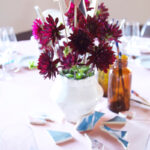
Il matrimonio d’autunno: un esempio di wedding planning
La rubrica “la ricetta che non c’è” da oggi, per qualche settimana, cambia pelle e diventa qualcosa di un po’diverso. La chiameremo “il matrimonio che non c’è” e racconterà come Kitchen Wishes affronta l’organizzazione dell’evento per eccellenza: il matrimonio.
Come per le ricette, anche il nostro wedding planning ha dietro una vera e propria filosofia di vita.
Chi ci conosce sa che amiamo non avere regole predefinite e lasciare libero sfogo alla creatività.
Quando si parla di matrimoni, però, la creatività da liberare non è tanto la nostra, quanto quella dei protagonisti assoluti della giornata: gli sposi.
Il nostro obiettivo è capire la loro idea, e rappresentarla, che sia formale o casual, antica o moderna, originale o classica.
Potrei dire, con tipico linguaggio da marketing, che “Kitchen Wishes non propone un planning predefinito, scegliendo di personalizzarlo totalmente in base alle esigenze del committente”.
Potrei, ma non mi piace per niente… preferisco dire che il nostro scopo è ascoltare, conoscere, entrare in sintonia, creare una corrente emotiva tra organizzatori e sposi che permetta a noi di capire fino in fondo che sogno hanno in mente, e a loro di vederlo il più possibile realizzato.
Perché i ragazzi di Kitchen Wishes non sono solo cuochi, camerieri, scenografi, musicisti come abbiamo visto finora, ma anche “wedding planners” (brutta parola, anche questa: suggerisco “inventori matti di matrimoni perfetti” o anche “folletti deliranti al servizio di sposi creativi”).
Ma per spiegarmi meglio, il modo più comprensibile è sicuramente raccontarvi – in due puntate – uno degli eventi recentemente organizzati: il “matrimonio d’autunno”.
In questa occasione gli sposi, appassionati di arte, letteratura e architettura, desiderano rappresentare un’atmosfera precisa, citando i loro autori e artisti di riferimento in modo allo stesso
tempo classico ma originale, immergendo gli ospiti in un mood autunnale, colto e raffinato.
Così, ogni tavolo degli ospiti è dedicato a un autore mentre il tavolo degli sposi ha l’autunno come tema generale, declinato anche nel menu e attraverso altri dettagli nella scenografia di sala.
I fiori autunnali, protagonisti della scena, sono uguali per ogni tavolo, ma composti diversamente.
Come segnaposto è stata scelta una castagna, tipico frutto autunnale.
Ogni menu ha un font diverso, legato al personaggio cui il tavolo è dedicato. Il tavolo “Lorenzo il Magnifico” ha come centrotavola un grande vaso di terracotta con i fiori svettanti, dritti e sottopiatti d’oro a ricordare la sontuosità della corte medicea.
L’eleganza di Audrey Hepburn viene ricordata mettendo i fiori in una grande coppa Martini e
usando dei sottopiatti d’argento.
Per Pablo Picasso il vaso da fiori è geometrico, cubista, a ricordare il quadro “Mademoiselle d’Avignon”, rappresentato in trasparenza nel sottopiatto. Nel vaso, oltre ai fiori, pennelli tinti di blu.
Sul tavolo “Jack Kerouac”, autore di “On the road” e narratore della vita sulla strada, il sottopiatto è
di latta e il centrotavola è una scatola di legno con fogli manoscritti, oggetti umili e fiori sparsi
disordinatamente.
L’ossessione di Haruki Murakami per il dettaglio e l’ordine viene raccontata attraverso fiori disposti
singolarmente in piccoli cilindri, un’estetica asettica e lineare, sottopiatti in vinile.
L’architetto Frank Lloyd Wright prevede invece sottopiatti in lavagna e piccole vasche trasparenti in
vetro con micropaesaggi fatti di sassi, muschio e fiori.
Per finire, Virginia Woolf: sottopiatto a fiori in stile inglese, mazzolino di fiori piccolo, rotondo, dentro un calamaio. Libri sparsi sul tavolo.
La scelta estetica autunnale, infine, offre una predominanza del colore bordeaux (livree dei camerieri, tovaglie), l’uso di foglie secche anziché dei classici petali di fiori sul viale d’ingresso della festa, l’aperitivo, ricco di frutta di stagione (castagne, mele, diosperi), viene servito su assi di legno appena tagliato.
Per oggi è tutto: spero di avervi, magari, dato qualche spunto utile per il vostro matrimonio… il resto
(aperitivo, vini, menu) alla prossima puntata!
The Autumn Wedding: A Lesson in Wedding Planning
For a few weeks, our column “The Recipe That Doesn’t Exist” is changing its skin —
and becoming something slightly different.
We’ll call it “The Wedding That Doesn’t Exist.”
In this new series, we’ll tell you how Kitchen Wishes approaches the event par excellence:
the wedding.
Because — just like with recipes — our idea of wedding planning is built on a real philosophy of life.
No Rules, Just Stories
Those who know us already know we love to break patterns,
to work without predefined rules and give creativity full freedom.
But when it comes to weddings, the creativity to be freed isn’t ours —
it’s that of the true protagonists of the day: the couple.
Our goal is to understand their vision and bring it to life,
whether it’s formal or casual, ancient or modern, bold or classic.
I could say, in typical marketing language,
that “Kitchen Wishes doesn’t offer a predefined planning model but personalizes each event
based on the client’s specific needs.”
I could say that — but I don’t like it at all.
I’d rather say that our purpose is to listen, connect, and tune in —
to create an emotional current between the organizers and the couple,
so that we can understand their dream fully,
and they can see it come to life, as closely as possible, before their eyes.
Mad Inventors of Perfect Weddings
Because at Kitchen Wishes, we’re not just chefs, waiters, set designers, and musicians —
we’re also, well… wedding planners.
(An awful word, really. We prefer “mad inventors of perfect weddings.”
Or maybe “delirious elves at the service of creative newlyweds.”)
To explain what we mean, the best way is to tell you a real story —
in two parts — of one of our latest events: The Autumn Wedding.
The Autumn Wedding
The couple — lovers of art, literature, and architecture —
wanted to create a specific atmosphere:
a cultured, refined autumnal mood,
with references to their favorite artists and authors,
both classic and contemporary.
Each guest table was dedicated to a different author,
while the couple’s table had autumn itself as its theme —
a concept reflected in the menu and the floral and scenic details of the space.
The flowers, all seasonal, were the same at every table
but arranged differently each time — small variations of the same symphony.
As a place card, the couple chose a simple chestnut —
the most iconic autumn fruit.
Each menu was printed in a different font,
matching the writer or artist the table was dedicated to.
The Tables
- Lorenzo the Magnificent
A large terracotta vase with tall flowers and golden chargers,
evoking the grandeur of the Medici court. - Audrey Hepburn
Flowers arranged in an oversized Martini glass,
with elegant silver chargers —
a nod to timeless grace. - Pablo Picasso
A cubist, geometric vase recalling Les Demoiselles d’Avignon,
whose silhouette appeared faintly printed on the plate.
Blue-tinted paintbrushes peeked out among the flowers. - Jack Kerouac
The spirit of the road translated into tin chargers
and a wooden box centerpiece filled with handwritten pages,
humble objects, and flowers scattered in beautiful disarray. - Haruki Murakami
An obsession with order and detail rendered in minimalist form:
single flowers in glass cylinders,
vinyl record chargers —
quiet, precise, hypnotic. - Frank Lloyd Wright
Chalkboard chargers and small glass basins
containing miniature landscapes of moss, stones, and flowers. - Virginia Woolf
English floral chargers, small round bouquets in inkwells,
and books scattered across the table —
poetic and introspective.
The Autumn Mood
The overall aesthetic embraced the season fully:
deep burgundy tones for the tablecloths and staff uniforms,
dry leaves instead of petals lining the garden aisle,
and an aperitif rich in seasonal fruits —
chestnuts, apples, persimmons —
served on freshly cut wooden boards.
That’s all for today.
Maybe we’ve given you a few ideas for your own wedding…
As for the rest — the aperitif, the wines, the menu —
you’ll have to wait for the next chapter.
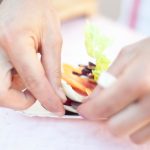
Kitchen Wishes alle prese con le verdure crude, tra invenzione, gioco e condivisione Da buon toscano, nato e cresciuto a Firenze, adoro il concetto di pinzimonio: l’esplosione di gusto e freschezza creata dall’assaggio di verdure appena tagliate e intinte in varie salsine riattiva il sorriso, rianima lo spirito, fa bene all’umore.I colori delle verdure fresche sono arte, il modo di affettarle e disporle nel piatto crea paesaggi e sculture, la scelta della salsa di accompagnamento può far esplodere nuove, impreviste sinfonie gustative. I ragazzi di Kitchen Wishes si sono dedicati al variopinto mondo della verdura cruda grazie agli esperimenti fatti da Giulia, la nostra chef, presso la Libreria Brac di Firenze (punto di riferimento in città per la cucina vegetariana innovativa), e lo hanno inserito nel loro progetto di catering creativo. L’intenzione di partenza era semplice: servire un’insalata gustosa, da mangiarsi con le mani. L’invenzione che ne è derivata è la ricetta che non c’è di oggi: la crudité speciale di Kitchen Wishes.Verdure composte come un concerto, o un dipinto, mutevole a seconda delle stagioni, dei tagli e delle consistenze. Una sorta di mandala che rappresenta chi lo compone: la creazione infatti non spetta al cuoco, ma all’avventore. Da qui all’idea di una vera e propria live cooking performance interattiva il passo è stato breve: nei nostri catering proponiamo come parte del finger food un banco dedicato appositamente alla crudité. Le verdure vengono tagliate e disposte come isole, piccoli mondi colorati, di fronte agli ospiti, che possono scegliere se ricevere una composizione già predisposta ed esclusiva o, in alternativa, comporre il proprio piatto a piacere. Anche i piatti avranno forme e colori diversi, permettendo agli avventori di costruirsi il proprio evento-installazione personale. Le variabili possono aumentare a piacimento, moltiplicando le salse, i tipi di verdura, la scelta dei piatti. I bambini, soprattutto, troveranno entusiasmante la possibilità di scegliere, comporre, creare. In una parola, di giocare con l’opera-cibo prima di nutrirsene. L’unico domanda che rimane è: ma a questo punto, a cosa serve uno chef?Il cuoco, qui, ha il ruolo di legare gli ingredienti: è il direttore d’orchestra che rende armonioso l’intervento del peperone baritono, del cipollotto tenore , della carota soprano, facendoli suonare insieme come una cosa sola. La bacchetta del direttore d’orchestra, per Kitchen Wishes, è la gustosa e semplicissima salsa speciale creata da Giulia: Hummus kitchen wishes Ingredienti500 gr. di ceci lessiIl succo di 2 limeUno spicchio d’aglioMezzo cucchiaino di cuminoUn peperoncino frescoDue barbabietole lesseUn bicchierino d’olioSale q.b. PreparazioneStrofinare i ceci a mollo in acqua per togliere la buccia.Frullare tutti gli ingredienti freddi. Servire in una ciotola con una manciata di sesamo tostato e una spruzzata di lime.Immergetevi le verdure crude e… giocate! PS: i nostri genitori ci dicevano sempre di non giocare col cibo.Si sbagliavano: il gioco è un atto d’amore, e giocare col cibo è il modo migliore per amarlo. Let’s play with food!
Kitchen Wishes Takes on Raw Vegetables — Between Invention, Play, and Sharing
As a true Tuscan, born and raised in Florence, I’ve always loved the concept of pinzimonio —
that explosion of flavor and freshness when you dip crisp vegetables into a medley of sauces.
It lifts your spirits, brings back your smile, and revives your mood.
The colors of fresh vegetables are pure art.
The way you slice and arrange them creates landscapes and sculptures,
and the choice of dip can trigger unexpected symphonies of taste.
The Art of the Raw
The Kitchen Wishes team dove into the vibrant world of raw vegetables thanks to the experiments of our chef, Giulia, at Libreria Brac in Florence — a local landmark for innovative vegetarian cuisine.
From there, the idea found its place in our creative catering projects.
It all started with something simple:
we wanted to serve a salad you could eat with your hands.
The invention that followed became today’s Recipe That Doesn’t Exist:
Kitchen Wishes’ Special Crudité.
Vegetables composed like a symphony — or a painting —
changing with the seasons, the cuts, and the textures.
A kind of edible mandala that reflects the person who creates it.
Because here, the creator is not the chef — it’s the guest.
A Game of Creation
From there, the leap to a true interactive live cooking performance was natural.
At our catering events, we now include a crudité station as part of the finger food experience.
The vegetables are cut and arranged like small islands —
tiny, colorful worlds — right in front of the guests.
They can choose to receive a pre-designed plate,
or compose their own, picking colors, textures, and shapes.
Even the plates come in different forms and colors,
allowing each guest to build their own personal food installation.
The possibilities are endless:
more sauces, more vegetables, more combinations.
Children especially love the chance to choose, mix, and play —
to create before they eat.
In one word: to play with food.
So… What’s the Chef’s Role, Then?
The chef, in this case, becomes the conductor —
the one who brings harmony to the ingredients:
the baritone bell pepper, the tenor spring onion, the soprano carrot.
Together, they form an edible orchestra.
And the conductor’s baton, for Kitchen Wishes,
is our deliciously simple signature sauce:
Kitchen Wishes Hummus
Ingredients
- 500 g cooked chickpeas
- Juice of 2 limes
- 1 garlic clove
- ½ teaspoon cumin
- 1 fresh chili pepper
- 2 cooked beets
- 1 small glass of olive oil
- Salt to taste
Preparation
Rub the chickpeas in water to remove the skins.
Blend all ingredients cold until smooth.
Serve in a bowl with toasted sesame seeds and a squeeze of lime.
Dip your raw vegetables in it — and play!
PS
Our parents always told us not to play with food.
They were wrong.
Play is an act of love — and playing with food is the best way to love it.
Let’s play with food!
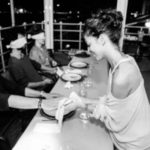
Empatia, ascolto, convivialità. Nessun piatto può vivere da solo, senza tenerne conto. Perché il cibo è tutte queste cose: strappato dalla sua ragion d’essere e gettato sul tavolo di una giuria o nelle gallerie fotografiche dei social, semplicemente, muore. Oggi partiamo da una serie di interviste sul tema “il fattore umano” tratte dal sito del prestigioso magazine internazionale di cucina Identità Golose. Questo articolo vuole essere una riflessione su alcuni temi che Kitchen Wishes ha da tempo identificato come il cuore stesso dall’attività di chi cucina per un pubblico. Tutto quello che abbiamo scritto in questi anni ne “La ricetta che non c’è”, tutte le iniziative intraprese e le mille domande che ci siamo fatti hanno a che fare con questa questione. Alla base di tutto il nostro percorso, che ci permettiamo di definire al passo coi tempi, c’è l’idea che non esista una ricetta perfetta. Niente può prescindere dall’alchimia tra chi la prepara e chi ne fruisce, tra gli ingredienti scelti, il contesto, l’occasione e il luogo. Chi ci segue sa che questa è da sempre la chiave di volta di Kitchen Wishes: il piatto non è bello né buono “in sé” ma, semplicemente, deve adattarsi, respirare e vivere il momento, somigliare a chi ne godrà. Alla ricerca di momenti squisiti Sempre più spesso, a differenza di un passato nemmeno troppo remoto, le persone cercano esperienze che gli somiglino, non prodotti finiti da ricevere passivamente. Noi siamo pronti ad ascoltare le vite di chi abbiamo il piacere e l’onore di mettere a tavola, rendendo ogni occasione un’esperienza diversa… o, come ci piace dire, un momento squisito. Niente menu prefabbricati: ogni luogo ha il suo respiro e la sua personalità, che cambierà fatalmente la percezione dei piatti degustati! Il sito di Identità Golose al momento non ha ancora applicato queste riflessioni al mondo del catering, ma nonostante questo noi piccoli sperimentatori non possiamo che essere felici di aver trovato riconosciuti i principi che seguiamo ormai da anni! Sosteniamo con forza che, nell’epoca dei selfie e delle apparenze, in cui ogni piatto viene prima di tutto fotografato e messo in rete, la regola è e rimane la stessa: non è la fotogenicità, ma il sapore e il contesto a fare la differenza. La tavola non è un reality Un piatto non potrà mai vivere di vita propria se dissezionato sul tavolo di un manipolo di giudici da reality show, del tutto scisso dall’esperienza sociale che deve innescare, senza conoscere i rumori, le parole, le risate e i profumi del luogo in cui si svolgerà l’evento. Il contrario è un dilagare di piatti che scimmiottano culture diverse o menu di chef stellati, senza tenere conto del motivo per cui sono nati. Un po’ come quei capi di abbigliamento che “vanno su tutto”, perdono di vista il contesto per dichiararsi omologati ancora prima di uscire dalla cucina per andare in tavola. A frenare l’invenzione, il terrore di essere giudicati da chi, nei social o “negli ambienti che contano”, vuole solo cavalcare l’onda ed è pronto a bombardare e affondare chiunque provi a distinguersi. Ogni piatto è una storia Ci ha colpito un esempio tratto proprio dal sito di Identità Golose, che riportiamo:“Fateci caso: fino a un paio di anni fa il ceviche era pressoché sconosciuto, ora fa capolino in sempre più menu. Ha senso se prima impariamo tutto quello che sta a monte della preparazione regina della cucina peruviana. Ma quanti lo fanno?” Ogni piatto ha una storia, una geografia, un percorso. Ogni piatto ha senso non solo “di per sé”, ma in quanto lascito di una cultura che ci precede. Il gusto che assaporiamo non può prescindere dalla conoscenza delle materie prime, dal rispetto per chi lo ha inventato e tramandato, dal contesto in cui è stato realizzato. In due parole, dal Fattore Umano. Gettare in pasto passivamente il ceviche a chi non ha alcuna conoscenza né considerazione della sua storia è facile e porta a immediati consensi, crea una nuova moda e facili applausi… ma non fa per noi, né per chi ha bisogno di chiudere gli occhi e scoprire, attraverso il gusto, interi universi. The Human Factor Non basta. Il Fattore Umano è imprescindibile in mille altre maniere.Ben lungi dalla glorificazione dello chef-divinità, la cucina prevede un rapporto complesso tra il “genio creativo”, ovviamente fondamentale, e gli altri elementi che sono in gioco. I collaboratori in cucina e in sala, i rapporti con i fornitori, l’empatia con i clienti, la conoscenza profonda delle materie prime e della storia dei piatti che vengono messi in tavola. In poche parole, proprio quelle cose che la rete, per altri versi fondamentale fonte di conoscenza, sapere e interconnessione col mondo, non può offrire: il confronto diretto, faccia a faccia, con lo staff, con il cliente, con il negoziante, con chi procura la materia prima, che va toccata, annusata, percepita. Alla fine, quello che diciamo da anni noi di Kitchen Wishes è proprio questo: l’attenzione non va puntata solo sul piatto, ma sul convivio. Su quello che succede intorno al piatto.L’interazione, l’empatia, i sorrisi, le conversazioni, l’incontrarsi di persone differenti sotto il segno di un’esperienza che ha a che fare col cibo. Uno chef non è un’isola Forse in futuro potremo fare quasi qualunque cosa on line, ma siamo certi che una cena tra amici continuerà a fare parte di quel “quasi”. Le relazioni passeranno attraverso un tavolo dove si mangia insieme, oggi come ieri e come duemila anni fa. Passeranno attraverso il rapporto di amicizia tra lo chef e allevatori, pescatori, agricoltori, designer, arredatori in grado di rendere il suo ristorante portatore di un’esperienza unica e irripetibile. Magari scimmiottabile, ma solo esteriormente. Passeranno, infine, dal rispetto e dalla collaborazione di un gruppo di lavoro in cui ogni ruolo ha un peso e viene rispettato. In cui non c’è un “re”, una bizzarra divinità che imperversa ai fornelli ignara del gruppo che lavora per lui. Nessun ristorante può fare a meno del genio dello chef, ma nessuno chef potrà essere un’isola, in grado di ignorare o peggio disprezzare tutti coloro che lavorano con lui per rendere quella particolare cena, quella particolare serata, degna di essere vissuta. La bandiera dell’empatia Infine ci colpisce la sintonia che abbiamo riscontrato sul tema della multisensorialità.La cucina, per citare ancora il sito di Identità Golose, “deve essere una coreografia emozionale, un gioco sensoriale che non si deve dimenticare. Si deve percepire intelligenza corporeo-cinestetica, tecnica, esistenziale, musicale; ci deve essere piena sintonia tra cliente, cucina e sala”. Non potremmo essere più d’accordo. In una parola, ancora e sempre: empatia. Ascoltare è l’unica parola che ha senso in un momento storico in cui nessuno ascolta, tutti urlano la loro verità, tutti sgomitano per essere visti.Ascoltare è una parola rivoluzionaria, nel 2018, e ci teniamo particolarmente a dire di averla alzata come una bandiera da molti anni. La nostra bandiera, la bandiera di Kitchen Wishes. Appuntamento alla prossima puntata de “La ricetta che non c’è”!
Empathy, listening, conviviality.
No dish can truly exist without them.
Because food is all these things.
Stripped of its purpose and thrown onto a judge’s table or into the glossy galleries of social media, food simply — dies.
A Question of Humanity
Today’s reflection starts from a series of interviews published on Identità Golose,
the international culinary magazine that recently explored “The Human Factor.”
This topic resonates deeply with Kitchen Wishes,
because it embodies everything we’ve been writing, cooking, and questioning for years
in our column “The Recipe That Doesn’t Exist.”
At the core of our journey —
one we proudly consider in step with the times —
is the conviction that there is no such thing as a perfect recipe.
Nothing can exist apart from the alchemy between those who create it and those who experience it —
between the chosen ingredients, the setting, the moment, and the people gathered around the table.
Those who know us already know: this has always been the cornerstone of Kitchen Wishes.
A dish is neither beautiful nor good “in itself.”
It must breathe, adapt, and live in the moment —
it must resemble the person who will enjoy it.
In Search of Exquisite Moments
More and more, people today are seeking experiences that reflect who they are —
not ready-made products to consume passively.
We are here to listen to their stories, their lives,
and to transform each occasion into a different experience —
or, as we like to say, into an exquisite moment.
No prefab menus, no universal formulas:
every place has its own rhythm, its own personality,
and these inevitably change how each dish is perceived.
Identità Golose has yet to apply these reflections to the world of catering,
but we, small experimenters that we are,
can only be proud to see our principles recognized by others at last.
Because we’ve been saying it for years:
in the age of selfies and appearances,
where every dish is photographed before it’s even tasted,
the rule remains the same —
it’s not photogenic beauty, but flavor and context that make the difference.
The Table Is Not a Reality Show
A dish cannot live a life of its own
when dissected by a panel of reality-show judges,
detached from the social experience it’s meant to inspire —
deaf to the sounds, laughter, and aromas of the place it belongs to.
The result is a flood of dishes that imitate foreign cultures
or mimic Michelin-starred menus without remembering why they were born.
It’s like a piece of clothing that “goes with everything” —
in trying to fit all contexts, it loses its soul before it even leaves the kitchen.
Creativity today is often paralyzed by the fear of judgment —
by those who, online or “in the right circles,”
are ready to destroy anyone who dares to stand out.
Every Dish Has a Story
One example from Identità Golose struck us deeply:
“Think about it: a few years ago, ceviche was practically unknown.
Now it appears on menus everywhere.
It makes sense — but only if we take the time to understand
the culture and knowledge behind the signature dish of Peruvian cuisine.
How many actually do that?”
Every dish has a story, a geography, a journey.
It only makes sense as part of the culture that created it.
Taste cannot exist without knowledge of the ingredients,
respect for those who invented and preserved it,
and awareness of the context in which it was born.
In two words: the Human Factor.
Serving ceviche to people who know nothing of its history may bring quick success —
a trend, easy applause —
but it’s not for us.
We cook for those who want to close their eyes and discover entire worlds through taste.
The Human Factor, Expanded
But that’s not all.
The Human Factor is essential in countless ways.
Far from glorifying the chef-as-deity,
true cuisine depends on a complex balance between creative genius and everything around it —
the kitchen and floor staff, relationships with suppliers,
empathy with clients, and deep knowledge of ingredients and their history.
These are precisely the things the digital world —
for all its wonders — can’t offer:
direct, human connection.
Face-to-face encounters with the team, the client, the farmer, the fisherman, the grocer.
Touching, smelling, feeling the ingredients.
At the end of the day, what we’ve been saying for years is this:
the focus should never be just the dish — but the experience around it.
The laughter, the conversations, the exchange between people who meet through food.
No Chef Is an Island
Maybe someday we’ll be able to do almost everything online.
But we’re sure that sharing a meal among friends will always remain part of that “almost.”
Human connection will always pass through a table,
as it did two thousand years ago.
Through the friendships between chefs and farmers, fishmongers, and artisans
who make each restaurant a living, unique experience —
one that can perhaps be imitated, but never truly replicated.
Through teams built on respect,
where every role matters and no one plays god.
No restaurant can exist without its chef’s talent,
but no chef can thrive as an island —
blind to the people who help turn each dinner, each evening,
into something worth living.
The Flag of Empathy
Finally, we were struck by Identità Golose’s reflection on multisensoriality:
“Cuisine must be an emotional choreography —
a sensory play that lingers in memory.
It should express bodily, technical, existential, and musical intelligence,
creating full harmony between guest, kitchen, and dining room.”
We couldn’t agree more.
In a word — always, and still — empathy.
Listening is the only thing that makes sense in a world
where no one truly listens anymore,
where everyone shouts their own truth, desperate to be seen.
Listening, in 2018, is revolutionary.
And we’re proud to have raised that word as our banner for years —
our banner, the banner of Kitchen Wishes.
Stay tuned for the next chapter of “The Recipe That Doesn’t Exist.”
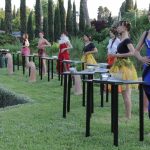
Una ricetta multisensoriale
Anche oggi la nostra “ricetta che non c’è”, contraddicendosi un po’, contiene una vera ricetta.
Ma, a differenza della settimana scorsa, stavolta ve la riveliamo subito: si tratta di una saporita, goduriosa, “semplice” crocchetta di patate. Ma, come sempre, non tutto è ciò che sembra…
Si comincia con gli ingredienti:
– 500 grammi di patate lesse
– 2 uova
– 30 grammi di parmigiano
– pangrattato
– farina
– sale e pepe
– timo
L’ultimo, inaspettato ingrediente è… una compagnia di danza composta da un nutrito quantitativo di cuoche-ballerine.
Ebbene sì, a noi di Kitchen Wishes per fare una crocchetta servono almeno sette/otto persone.
Chiamate pure la neuro, ma ci piace così.
La nostra idea del giorno è proprio questa: trasformare una crocchetta di patate in una performance
artistica multisensoriale degna della Biennale di Venezia!
Del resto, ammettetelo, si è visto molto di peggio alle ultime edizioni della Biennale…
Ma procediamo con ordine. Le fasi sono quelle classiche di ogni crocchetta che si rispetti: sbucciare le patate lesse e schiacciarle; condirle con sale, pepe e timo; aggiungere uova e parmigiano e impastare; dare forma alle crocchette; infarinarle; passarle nell’uovo; passarle nel pangrattato; friggere in olio bollente; salare e servire.
Ogni fase è gestita da una singola ballerina-cuoca che, a suon di musica e a passo di danza, procede all’azione per poi passare il gustoso risultato alla danzatrice successiva, e così via, impastando, infarinando, friggendo. Il tutto fino a quando la crocchetta, calda e ben cotta, verrà solennemente servita imboccando l’avventore che, in ginocchio, riceverà una sorta di curiosa quanto saporita comunione del gusto.
La consistenza tattile, il sapore e il profumo della crocchetta si uniranno alla danza colorata delle cuoche-ballerine e alla musica per creare un’esperienza in grado di coinvolgere contemporaneamente tutti e cinque i sensi.
Per poter realizzare questa follia abbiamo l’onore di poter lavorare con la Compagnia Brick di Firenze, un gruppo di ballo molto particolare.
Nata nel 2003 da un’idea dell’insegnante, danzatrice professionista e coreografa Deborah La Mantia, la Compagnia Brick ha la particolarità di ricercare in ogni danzatore, più che la tecnica, l’emotività, l’estro, la personalità. In più di dieci anni di vita teatrale ha realizzato performance di ogni tipo, scegliendo spesso ambienti “anomali” come carceri, enoteche, librerie e ristoranti.
La particolare attenzione della Compagnia alla multisensorialità ha conquistato subito noi di Kitchen Wishes, che abbiamo scoperto in queste “strane” ballerine delle splendide compagne di
gioco e lavoro: questa puntata del nostro blog è un’occasione per ringraziarle.
Kitchen Wishes e Compagnia Brick hanno realizzato con successo questa performance interattiva durante l’evento “Momenti” del 4 giugno 2015 e saremo felici di replicarlo su richiesta in
qualunque evento, matrimonio, occasione o festa vogliate organizzare: se volete anche voi trasformare una crocchetta in un evento unico, contattateci.
A Multisensory Recipe
Today’s “Recipe That Doesn’t Exist” contradicts itself a little —
because this time, it actually does contain a real recipe.
Unlike last week, we’ll reveal it right away:
a tasty, indulgent, “simple” potato croquette.
But, as always, not everything is what it seems…
The Ingredients
- 500 g boiled potatoes
- 2 eggs
- 30 g grated Parmesan
- Bread crumbs
- Flour
- Salt and pepper
- Thyme
And the last, most unexpected ingredient…
a dance company made up of several chef-dancers.
Yes, you read that right.
Here at Kitchen Wishes, it takes at least seven or eight people to make a croquette.
Call us crazy — we’ll take it as a compliment.
The Idea
Our idea for the day is precisely this:
to turn a humble potato croquette into a multisensory performance worthy of the Venice Biennale.
After all, admit it — you’ve seen far stranger things there.
But let’s proceed in order.
The stages are the classic ones any respectable croquette would expect:
peel and mash the boiled potatoes; season with salt, pepper, and thyme;
add the eggs and Parmesan; shape the croquettes; dust with flour;
dip in egg; coat with breadcrumbs; fry in hot oil; salt and serve.
The Performance
Each phase is carried out by a single chef-dancer,
who moves to music, performing her part before passing the delicious result
to the next performer in line — kneading, coating, frying —
until the croquette, hot and golden, is solemnly served.
The guest, kneeling like at a curious culinary communion,
is gently fed the croquette —
while touch, taste, and scent blend with the dancers’ colorful movements
and the surrounding music to create a true five-senses experience.
The Dancers Behind the Magic
To bring this beautiful madness to life,
we have the honor of collaborating with Compagnia Brick of Florence —
a very special dance company.
Founded in 2003 by dancer, teacher, and choreographer Deborah La Mantia,
Brick seeks not only technique in its performers,
but emotion, personality, and imagination.
Over more than a decade of creative work,
they have staged performances in the most unexpected settings —
from prisons to wine bars, bookshops to restaurants.
Their sensitivity to multisensoriality instantly won our hearts.
In these “unusual” dancers, we found wonderful partners in play and creation —
and this article is our way of saying thank you.
A Croquette Worth Dancing For
Kitchen Wishes and Compagnia Brick brought this interactive performance to life
during the “Momenti” event on June 4, 2015 —
and we’ll be thrilled to recreate it upon request,
at any event, wedding, or celebration you’d like to make unforgettable.
So if you, too, want to turn a potato croquette into a one-of-a-kind experience —
you know where to find us.

Musiche speciali per cene speciali
Quando si parla di abbinamenti, in cucina, normalmente si parla di vino.
Ma abbinare è un concetto molto più ampio: si può abbinare un piatto a un libro, un vino a un
paesaggio, un ballo a una pietanza, un gioco a una bevanda.
Questa volta parleremo di musica, passione che accomuna tutti noi di Kitchen Wishes.
Musica e cibo.
O anche: musica, cibo e vino.
Come abbinare tutti i vari elementi sensoriali per ottenere un’esperienza completa?
I sensi sono cinque e una buona cena ne mette in gioco almeno tre: il gusto, l’odorato e la vista.
Anche il tatto in molti casi viene coinvolto, ma il grande assente, in cucina, è normalmente l’udito.
Non siamo certo i primi a parlarne: ci sono fior di testi che si occupano di questa connessione,
creando, per esempio, un collegamento sensoriale tra suoni acuti e sapori dolci o tra frequenze basse
e sapori amari. Ne consegue, immagino, che la voce di Mika sia perfetta con il tiramisù, mentre
Mark Lanegan vada abbinato al fegato alla veneziana…
I sacri testi ci dicono anche altro: per esempio che il cibo etnico offre la migliore delle emozioni se
connesso con musiche del luogo di provenienza.
Non posso che concordare: per gustare le pregiate ostriche irlandesi di Galway, niente di meglio che
abbinarle con una pinta di Guinness, con l’accompagnamento dello sghembo coro da marinai
ubriachi del sublime “Rum, Sodomy and the Lash” dei Pogues.
Dimenticate lo champagne e fidatevi: è un moatrimonio semplicemente perfetto.
Pensando alla musica etnica, come non citare i cevapcici, un’istituzione dei paesi dell’ex-Jugoslavia:
salsicce di agnello e maiale speziate, servite con cipolla bianca e/o salsa di peperoni.
Con questa vivanda non molto raffinata ma potentissima, cosa meglio dello sfrenato folk-punk
balcanico dei Gogol Bordello?
Ma la connessione etnica è solo la più ovvia delle varianti possibili:
Mike Patton, leader dei Faith No More, ha pubblicato a fine anni ’90 il cd “Pranzo oltranzista“, in
cui ha musicato le ricette improbabili proposte dai futuristi italiani.
Ricette immangiabili e musica, va detto, pressoché inascoltabile: un progetto perfettamente
coerente.
Cambiando atmosfera, passiamo alla musica gothic: il risotto al nero di seppia, piatto nero per
eccellenza, ha avuto come cuoco padrino un allampanato Blixa Bargeld, leader dei cupi berlinesi
Einsturzende Neubauten, che con grande senso dell’umorismo si è improvvisato cuoco in un
divertente video che vi consigliamo di cercare on line.
Le possibilità sono infinite e assai soggettive: in una cena di qualche giorno fa ho abbinato la voce
crepuscolare di Nick Cave (“Push the sky away“) con un “Re Nero“, merlot 100% di Gualdo del Re,
azienda vinicola prestigiosa della zona di Suvereto, il tutto servito con delle quaglie all’alloro
ripiene di prugne e mele. Ne ho ottenuto un piacere perfetto: la voce profonda del “Re Inchiostro” si
è unita al gusto del “Re Nero” per potenziare il piacere della cacciagione.
Ma basta con le proteine animali: i vegetariani potranno senz’altro apprezzare un piatto a base di
ricotta, peperoni e cioccolato (una ricetta di Kitchen Wishes presentata all’evento “Momenti“),
legandolo alla voce di Thom Yorke dei Radiohead, mentre i vegani più convinti troveranno
prestigiosi alleati in musica, dal Morrissey di “Meat is Murder” alla bostoniana Amanda Palmer:
l’abbinamento può anche essere concettuale, anziché gustativo.
Troppo facile, infine, ma inevitabile unire la voce rauca del Tom Waits di “Singapore” a un piatto di
noodles take-away recuperati in una bettola perduta in un orientale “downtown” della grande
metropoli asiatica, o immaginare tartare di carne cruda come accompagnamento ideale alle bordate
metal degli Slayer, che peraltro producono in prima persona un ottimo vino californiano…
Ma questa era solo l’introduzione alla “ricetta che non c’è” della settimana prossima, in cui mi farò
da parte, lasciando spazio al creatore di suoni professionista di Kitchen Wishes, il dj Michael Byrne, grande alchimista di rumori e atmosfere musicali sghembe, appassionato di musica elettronica, vinili e atmosfere vintage. Insieme a lui, che cogliamo l’occasione per presentare, e alla
nostra chef multicolore, Giulia, prepareremo un menu possibile, in cui gli abbinamenti tra cibo e
musica si sposeranno alla perfezione: non mancate!
Special Music for Special Dinners
When we talk about pairings in the kitchen, we usually mean wine.
But pairing is a much broader concept.
You can pair a dish with a book, a wine with a landscape,
a dance with a meal, or a game with a drink.
This time, we’re talking about music — a passion we all share here at Kitchen Wishes.
Music and food.
Or rather: music, food, and wine.
A Symphony of the Senses
How do you combine all these sensory elements to create a complete experience?
We have five senses, and a good dinner usually engages at least three:
taste, smell, and sight.
Touch often joins the mix —
but in cooking, the great absentee is usually hearing.
We’re certainly not the first to talk about it:
plenty of studies explore the connections between sound and flavor —
for instance, how high-pitched notes evoke sweetness,
while low frequencies bring to mind bitterness.
So yes, that probably means Mika’s voice pairs beautifully with tiramisù,
while Mark Lanegan belongs with Venetian-style liver.
Sound and Taste: Perfect Matches
Sacred texts of gastronomy also tell us this:
ethnic food reaches its peak emotional impact when paired with music
from the same place of origin.
And I couldn’t agree more.
To fully enjoy the prized Irish oysters of Galway,
forget the champagne —
grab a pint of Guinness and let yourself be carried away
by the drunken sea shanties of The Pogues’ sublime album
“Rum, Sodomy and the Lash.”
A match made in heaven.
Thinking of ethnic flavors, how could we forget ćevapčići,
that staple of the former Yugoslavia:
spiced lamb and pork sausages served with white onion or red pepper sauce.
What better companion than the wild Balkan folk-punk
of Gogol Bordello?
Beyond Geography
Of course, ethnic pairings are just the most obvious path.
Take Mike Patton, frontman of Faith No More,
who in the late ’90s released “Pranzo Oltranzista” —
an album inspired by the bizarre recipes of the Italian Futurists.
The recipes are inedible,
the music nearly unlistenable —
a perfectly coherent project, if you ask us.
Changing atmosphere, let’s move to something darker.
Risotto al nero di seppia — the blackest of dishes —
once found its culinary soulmate in the lanky Blixa Bargeld,
leader of the brooding Berlin band Einstürzende Neubauten.
With great humor, he turned chef for a short video we highly recommend watching.
Personal Experiments
The possibilities are endless — and deeply subjective.
Just a few nights ago, I paired the dusky voice of Nick Cave
(Push the Sky Away)
with a Re Nero — a 100% Merlot from Gualdo del Re,
a prestigious winery in Suvereto.
Served with quail stuffed with prunes and apples,
the “Ink King’s” deep tones merged with the “Black King’s” bold flavor,
amplifying the pleasure of the hunt.
But enough with the animal proteins.
Vegetarians might appreciate a dish of ricotta, bell peppers, and chocolate
(a Kitchen Wishes recipe first presented at our “Momenti” event),
best paired with the haunting voice of Thom Yorke.
Vegans, meanwhile, will find powerful allies in music —
from Morrissey’s “Meat Is Murder”
to Amanda Palmer of Boston:
here, the pairing can be conceptual rather than purely sensory.
The Playlist Continues…
Too easy — yet inevitable —
to pair Tom Waits’ gravelly voice on “Singapore”
with a box of greasy noodles from some lost downtown eatery
in an Asian megacity,
or imagine a raw meat tartare as the perfect match
for the thunderous riffs of Slayer —
who, by the way, produce their own excellent Californian wine.
But this is only the introduction
to next week’s “Recipe That Doesn’t Exist”,
when I’ll hand the microphone to our resident sound wizard,
DJ Michael Byrne —
a master alchemist of rhythms and atmospheres,
lover of electronic beats, vinyl, and vintage soundscapes.
Together with him —
and our multicolored chef Giulia —
we’ll prepare a full menu
where food and music find their perfect harmony.
Don’t miss it!

Un dolce da ricordare per sempre: la scommessa di Kitchen Wishes La torta è un simbolo, prima di tutto. La rappresentazione concreta di una celebrazione, di una gioia. Il momento del dolce è il clou di ogni festa, che sia un matrimonio o un compleanno. Questa è la ragione per cui noi di Kitchen Wishes ci prendiamo profondamente a cuore le torte: sono la quintessenza, la sintesi del nostro lavoro. Riuscire a rendere concrete e visibili le aspettative e i sogni di chi vuole coronare un sogno è una responsabilità importante: per noi la torta è una faccenda molto seria. Kitchen Wishes non ama particolarmente le classiche torte di pasta di zucchero, poco interessanti da mangiare e noiose da servire: non cerchiamo un dolce che sia solo uno sfoggio di abilità da parte del pasticcere. Cerchiamo, al contrario, di capire chi sono gli sposi o i festeggiati e realizzare qualcosa che gli somigli, qualcosa che diventi, in due parole, un momento squisito da ricordare per sempre. In tanti, in questi anni, si sono voluti affidare a noi, lasciandosi sorprendere e accettando di non sapere fino all’ultimo istanto cosa avevamo in mente. Le nostre torte non sono solo una sorpresa per gli ospiti, ma anche per i festeggiati. Per esempio, il dolce di Rossella e Marco è stato un Paesaggio di bianco mangiare con due cocktail creati su misura, uno dedicato a lei e uno a lui.Claudio, per il suo compleanno, si è creato la sua torta personale davanti agli invitati.Valeria e Pietro, invece, hanno trovato un ricordo del loro primo incontro a Courmayeur: una vasca di panna montata pronta da inzuppare con le dolcezze più svariate: frolle, meringhe, frutta fresca.Per Sara e Chris, invece, la torta è diventata… una piramide di shottini al limoncello! A ognuno la sua torta, a ognuno il suo desiderio da realizzare.Per noi, ogni volta, una scommessa.La scommessa di ascoltare, accontentare, sorprendere chi ci ha scelto per organizzare un momento così importante della sua vita.A Kitchen Wishes, semplicemente, piace così. Appuntamento alla prossima settimana con “La ricetta che non c’è”!
A Dessert to Remember Forever: Kitchen Wishes’ Sweetest Bet
A cake is, above all, a symbol —
the tangible expression of celebration, of joy.
The moment of dessert marks the peak of every party,
whether it’s a wedding or a birthday.
That’s why, here at Kitchen Wishes,
we take cakes very seriously.
They are the quintessence of our work —
the visible, edible translation of someone’s dream come true.
Turning people’s expectations and emotions
into something real and memorable
is a responsibility we never take lightly.
For us, a cake isn’t just a dessert — it’s a story.
Beyond Sugar and Showpieces
We’re not particularly fond of traditional fondant cakes —
beautiful to look at, perhaps, but dull to serve and forgettable to taste.
We don’t aim to create something that only shows off
the pastry chef’s technical skills.
We aim to create something that resembles the people we’re celebrating —
a cake that becomes, in two words,
an exquisite moment to remember forever.
The Sweet Element of Surprise
Over the years, many have trusted us completely —
choosing to be surprised,
accepting not to know what we had in mind
until the very last moment.
Our cakes are not only a surprise for the guests —
they’re a surprise for the hosts themselves.
For example:
Rossella and Marco’s cake was a landscape of blancmange
accompanied by two bespoke cocktails — one for her, one for him.
Claudio, for his birthday, created his own personal cake live,
in front of his guests.
Valeria and Pietro found a sweet reminder of their first meeting in Courmayeur:
a pool of whipped cream ready to dive into,
surrounded by shortbread, meringues, and fresh fruit.
And for Sara and Chris, the cake turned into…
a pyramid of limoncello shots!
Every Cake, a Promise
To each their own cake.
To each their own dream made real.
For us, every time is a new challenge —
a bet on our ability to listen,
to delight,
to surprise those who choose us
to shape one of the most meaningful moments of their lives.
At Kitchen Wishes, that’s exactly what we love to do.
See you next week
for another chapter of “The Recipe That Doesn’t Exist.”
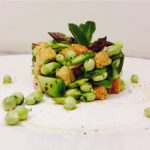
Aspettiamo il sole, le giornate lunghe, le passeggiate nella natura.Ma soprattutto, non ne possiamo più di tutta questa umidità.Non potrà piovere per sempre! Per portarci avanti, visto che la bella stagione tarda ad arrivare, abbiamo deciso di evocare la primavera con una ricetta fresca, piena di verde e di sapori perfetti per le giornate che speriamo siano imminenti. Ecco il nostro incantesimo, il nostro momento di magia positiva, la nostra danza del sole. Breve storia della panzanella La panzanella ha origini molto antiche, ne accenna anche Boccaccio nel Decameron, ed è un piatto tipico del centro Italia. Ce ne sono molte versioni (la nostra è l’ultima di una lunga serie), ma l’atto di nascita è semplicissimo: bagnare del pane secco, condirlo e unire le verdure dell’orto. Una pietanza povera, contadina, fatta per non sprecare il pane. Per quanto riguarda l’origina del nome, è dubbia. Alcuni ritengono che venga dall’unione delle parole “pane” e “zanella” che significava zuppiera, mentre secondo altre fonti è una derivazione del termine“panzana” che in antico significava “pappa”, anche se ha poi assunto il significato di “bugia”. Quel che conta, comunque, è che la bontà di questa leccornia saporitissima non è affatto una menzogna. La panzanella ha superato i secoli ed è giunta fino a noi in tutta la sua squisitezza! Panzanella verde – Incantesimo di primavera A questo punto, non c’è bisogno di altre parole: è il momento di scoprire questa esplosione di verde primaverile, tutta da assaporare! Ingredienti
- Fave fresche
- Piselli freschi
- Asparagi tagliati per obliquo abbastanza sottili
- Pomodori verdi
- Cipollotti freschi sottili
- Basilico e menta in foglie
- Olio, sale, pepe e aceto
- Dadini di pane nero tostato con sale e un goccio d’olio
Comporre gli ingredienti secondo il proprio istinto e la propria creatività… e degustarla invocando il sole.
Waiting for the Sun: A Spring Spell in the Shape of a Salad
We’re waiting for the sun, for long days and walks in nature.
But above all — we’ve had enough of this endless humidity!
It can’t rain forever, right?
So, since spring seems reluctant to arrive,
we’ve decided to summon it ourselves —
with a fresh, green recipe filled with the flavors of the season we’re all dreaming of.
Here it is: our spell of light,
our little moment of positive magic,
our very own sun dance.
A Brief History of Panzanella
Panzanella is an ancient dish — even Boccaccio mentions it in The Decameron.
It’s a staple of central Italy, and over the centuries it has taken on countless forms
(ours is simply the latest in a very long line).
At its heart, though, the recipe couldn’t be simpler:
soak stale bread, season it, and toss it with fresh garden vegetables.
It was born as a humble farmer’s dish,
a clever way not to waste bread —
and turned into a timeless Italian classic.
As for its name, opinions differ.
Some say it comes from pane (bread) and zanella (soup bowl).
Others trace it to panzana, which once meant “mash” or “porridge”
— before evolving into the modern sense of “tall tale.”
Whatever the origin, one thing is certain:
the flavor of this delicious, rustic dish is no lie.
It’s a recipe that has crossed centuries
and still reaches us in all its simple, tasty glory.
Green Panzanella — A Springtime Spell
No more words needed:
it’s time to savor this explosion of spring green!
Ingredients
- Fresh fava beans
- Fresh peas
- Asparagus, thinly sliced on the bias
- Green tomatoes
- Thinly sliced spring onions
- Fresh basil and mint leaves
- Olive oil, salt, pepper, and vinegar
- Cubes of toasted dark bread with a drizzle of oil and a pinch of salt
Compose your plate following your instinct and creativity,
then enjoy it while whispering a wish for sunshine.
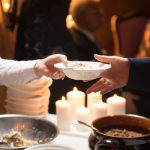
Quando la cucina diventa happening, è il momento di Kitchen Wishes! Kitchen Wishes, un po’ come una band musicale, ama più di ogni altra cosa la dimensione “live”.Per un catering come il nostro, questo significa offrire ai propri ospiti un momento in cui la cucina è performance e interazione, un concerto di sapori in cui al posto dei musicisti ci sono cuochi e camerieri. Cucinare dal vivo di fronte ai commensali è una sfida che non ammette errori, una scommessa con noi stessi e, nello stesso tempo, un momento divertente e stimolante sia per noi che per chi ci sta di fronte. L’allestimento cambia ogni volta, a seconda del tipo di situazione: dal buffet informale all’impiattamento in stile nouvelle cuisine, da momenti performativi e artistici legati al cibo, con tanto di camerieri-danzatori, costumi e coreografie eseguite per l’occasione. Il banco verrà realizzato seguendo lo stile dell’evento, armonizzandosi con gli altri elementi: fiori, luci, colori, musica, in modo da raccontare il nostro mondo immergendoci nello stesso tempo nell’atmosfera della festa, sia che si tratti di matrimoni che di catering di altro tipo (feste private, incontri aziendali, happening all’aperto…). Grazie a questa scelta performativa Kitchen Wishes diventa parte integrante della festa: in questo modo può raccontarne la storia attraverso i piatti con più calore e partecipazione. Lo spirito del nostro catering contemporaneo, infatti, è da sempre non avere dei “pacchetti” preconfezionati, scegliendo di trasformarci e adattarci a seconda del tipo di evento e della personalità dei committenti, per creare momenti squisiti sempre assolutamente unici. Seguendo l’ispirazione dei nostri avventori, negli anni abbiamo realizzato molti tipi di Live Cooking: ve li presentiamo, ma ricordatevi che questi sono solo spunti e ispirazioni. La nostra più grande gioia sarà realizzare qualcosa che non abbiamo mai fatto prima, seguendo i vostri più sfrenati desideri!
- Architettura di Crudité e Insalate: fresche e ardite costruzioni di sapori e colori
- Pareti di Tapas: fantasie di crostini con abbinamenti insoliti presentate verticalmente su alveari di ottone
- Brunch Passion: sfilate di pancakes per un brunch sfizioso
- Il Paninaro Fantasioso: tanti panini per tante salse, assortimenti per tutti i gusti
- La Dea del Fritto: alla ricerca della frittura perfetta, in una danza di sapori
- La Pastaia Illuminata: creazione di tortelli e maltagliati, tutto sul momento, davanti a voi
- Wok Wishes: wok fumanti ai sapori d’Oriente
- L’Hamburgeria Volante: mini hamburger sfiziosi dal sapore intramontabile
- Barbecue dei Tempi Andati: un rimorchio di trattore, tanta brace, tanto divertimento
- Pizza Party: a ognuno la sua pizza, a ogni farina il suo condimento!
Avete un evento nel cassetto? Un sogno da realizzare? Contattateci!
When Cooking Becomes an Experience — It’s Kitchen Wishes Time!
Like a good band, Kitchen Wishes loves one thing above all:
the live performance.
For a catering service like ours, that means offering guests a moment where cooking becomes a show, a dialogue, a concert of flavors — with chefs and waiters taking the place of musicians.
Cooking Live, Performing Together
Cooking live in front of guests is a challenge that leaves no room for error —
a bet with ourselves and, at the same time,
a source of pure fun and excitement for both us and those watching.
Each setup changes depending on the event:
from informal buffets to refined nouvelle cuisine plating,
from artistic food performances
complete with dancing waiters, costumes, and custom choreography.
Our live cooking stations are designed to reflect the event’s style,
harmonizing with its flowers, lights, colors, and music —
to tell our story while fully immersing ourselves in yours.
Whether it’s a wedding, a private party, a corporate event,
or an open-air happening,
Kitchen Wishes becomes part of the celebration itself,
telling its story through dishes filled with warmth and emotion.
The Art of Contemporary Catering
Our contemporary approach to catering has always been the same:
no pre-set “packages,” no rigid formats.
We prefer to transform and adapt
based on the event, the mood, and the personality of our hosts —
creating unique, exquisite moments that can never be repeated.
Over the years, inspired by our clients’ creativity,
we’ve brought countless types of Live Cooking to life.
Here are just a few —
but remember: these are only sparks of inspiration.
Our greatest joy?
Creating something we’ve never done before,
driven by your wildest wishes.
Our Signature Live Cooking Concepts
Architectures of Crudités & Salads
Fresh, daring constructions of colors and flavors.
Tapas Walls
Playful crostini combinations presented vertically on brass honeycombs.
Brunch Passion
A delicious parade of pancakes for a lively brunch experience.
The Imaginative Sandwich Maker
Endless bread, endless sauces — combinations for every taste.
The Goddess of Frying
A quest for the perfect fry — a dance of light, crispy flavors.
The Enlightened Pasta Maker
Tortelli and maltagliati created right before your eyes.
Wok Wishes
Steaming woks bursting with the aromas of the Orient.
The Flying Burger Bar
Mini burgers with timeless appeal.
Old-Time Barbecue
A tractor trailer, a roaring grill, and a whole lot of fun.
Pizza Party
To each their own pizza — to each flour its perfect topping!
Got an event in mind?
A dream waiting to come to life?
Let’s make it happen — together.



Le interviste di Kitchen Wishes, parte prima Da questa settimana “La ricetta che non c’è” darà voce ad alcuni dei collaboratori “multimediali” di Kitchen Wishes: coloro che rappresentano per noi un valore aggiunto prezioso, aiutandoci a sviluppare la nostra visione laterale di un catering creativo e contemporaneo, che coinvolge tutti i sensi.Cominciamo con Michael Byrne, musicista, d.j., alchimista sonoro, creatore di musica per eventi. Benvenuto a “La ricetta che non c’è”. Cominciamo dalla più classica e ovvia delle domande: come hai cominciato a fare musica? Il mio primo strumento è stato il sax e, da precoce amante del jazz, mi sono abituato fin da subito ad apprezzare le più varie contaminazioni, quali l’acid jazz e il trip hop.A circa 15 anni mi sono innamorato della musica elettronica, prevalentemente sperimentale e techno. Il passo successivo è stato cercare di miscelarla, creando un linguaggio personale. Quali sono le tue influenze musicali e i tuoi artisti di riferimento?Non saprei da che parte cominciare… posso solo elencare in ordine sparso alcuni nomi di musicisti molto diversi tra loro che nel corso degli anni mi hanno ispirato: Donald Byrd, James Brown, Fela, Moondog, J Dilla, Quantic, Mathew Jonson, Plastikman, Aphex Twin, James Holden. Ma l’elenco sarebbe davvero lunghissimo. Come e quando hai cominciato a collaborare con Kitchen Wishes? Il primo passo è stato il progetto Food Frequency, da lì il passaggio a una collaborazione più continuativa è stato molto naturale.Devo dire però che la nostra prima vera collaborazione è stato… il mio matrimonio!In quell’occasione Giulia ed Elena si sono occupate di tutta l’organizzazione, io della musica. Raccontaci l’evento di Kitchen Wishes in cui ti sei trovato meglio e cosa hai fatto in quell’occasione.Sicuramente l’evento che più mi ha emozionato è stato Momenti, che mi ha permesso di inventare di un autentico “giardino sonoro”. Mi sono occupato della sonorizzazione del giardino, utilizzando musica elettronica elaborata con rumori concreti di una cucina. Devo dire che la sinergia con tutto il gruppo Kitchen Wishes quell’occasione fu davvero speciale. Cosa ami del creare musica per eventi? Amo improvvisare. Raramente preparo una “scaletta”, mi diverte leggere e decifrare quello che ho davanti a me: l’ età dei presenti, il loro coinvolgimento, immaginare quelli che potrebbero essere i loro gusti. La ricerca del brano perfetto nel momento giusto.La mia idea, condivisa da tutto il gruppo di lavoro, è che ogni situazione preveda atmosfere diverse: la musica non può essere standard, buona per ogni occasione, ma deve rispecchiare l’anima dell’evento.Così come il menu, le bevande, la scenografia.Kitchen Wishes lavora così, e io pure. Perché hai scelto di legare la tua musica a situazioni precise, eventi, cene etc.?Hai scelto un approccio a più livelli sensoriali molto originale.Mettere musica durante simili eventi è stimolante perché non si deve essere invadenti, deve essere come una ventata che ti accarezza ma non ti sovrasta, le persone devono essere libere di interagire ma allo stesso tempo percepire qualcosa che le faccia sentire bene, che le faccia sorridere, muovere anche solo un piede o accendere un ricordo.La musica è un potentissimo interruttore di ricordi.Trovo affascinante anche trovare i collegamenti fra musica, ambiente e gusto, come per esempio nel caso di una cena. In questo senso ritengo che il mio approccio sia effettivamente multisensoriale.Tutto questo mi diverte molto, ed è un’esperienza completamente diversa da quella di un dancefloor, che è senz’altro stimolante ma su altri piani. Per concludere, mi racconti un aneddoto buffo o strano di una tua serata?Beh, ne sono successi tanti. Per esempio, una volta, mentre stavo suonando Miles Davis mi è stato chiesto di mettere un brano di Adriano Pappalardo. La mente delle persone è strana…un’altra volta mi sono trovato di fronte un russo che voleva assolutamente darmi 100 euro per mettere una canzone pop russa degli anni ’80.Ma forse il momento più divertente è stato quando un tipo mi ha chiesto: “scusa, ma la musica esce dai giradischi o dalle casse?” Grazie del tempo che mi hai dedicato, Michael, e a presto… ma, aspetta, un’ultima cosa: il russo te li ha dati, alla fine, quei 100 euro?Risponderò solamente davanti al mio avvocato. La ricetta che non c’è tornerà più presto del solito… restate connessi! Photo Credits: Matteo Lodolo
Kitchen Wishes Interviews – Part One
Featuring Michael Byrne: musician, DJ, and sound alchemist
Starting this week, “The Recipe That Doesn’t Exist” will give voice to some of Kitchen Wishes’ “multimedia collaborators” — the creative minds who bring extra magic to our events.
They help us expand our lateral vision of a contemporary, multisensory catering experience that engages every sense.
We begin with Michael Byrne — musician, DJ, sound alchemist, and creator of music for events.
Welcome to “The Recipe That Doesn’t Exist.”
Let’s start with the most classic question:
How did you first get into music?
My first instrument was the saxophone, and as an early jazz lover, I grew up appreciating all sorts of musical contaminations — acid jazz, trip hop, everything hybrid.
Around the age of fifteen I fell in love with electronic music, especially experimental and techno.
The next step was to start mixing those worlds and create my own language.
Who are your main influences?
I wouldn’t even know where to start… I can only list a few names — all very different — who have inspired me over the years:
Donald Byrd, James Brown, Fela, Moondog, J Dilla, Quantic, Mathew Jonson, Plastikman, Aphex Twin, James Holden.
The list could go on forever.
How did your collaboration with Kitchen Wishes begin?
The first step was a project called Food Frequency. From there, moving toward a closer partnership came naturally.
But honestly, our first real collaboration was… my wedding!
Giulia and Elena handled all the organization — I took care of the music.
Tell us about your favorite Kitchen Wishes event and what you did for it.
Definitely Momenti. It allowed me to create a true “sound garden.”
I worked on sonorizing the space, using electronic compositions mixed with real kitchen noises.
The synergy with the entire Kitchen Wishes team that day was pure magic.
What do you love most about creating music for events?
I love improvising.
I rarely plan a setlist — I prefer reading the room: the age of the guests, their mood, their energy.
My favorite part is finding the right track at the right moment.
My idea — which perfectly aligns with the Kitchen Wishes philosophy — is that every situation has its own unique atmosphere.
Music shouldn’t be “one size fits all,” but rather reflect the soul of the event — just like the menu, the drinks, the decor.
Why did you choose to focus on events and sensory experiences rather than the usual club scene?
Playing at these events is stimulating because you can’t be invasive.
Music has to be like a gentle breeze — something people feel, not something that overwhelms them.
Guests should be free to interact while still sensing something that makes them smile, tap their foot, or unlock a memory.
Music is a powerful switch for memories.
I also love exploring the connection between sound, environment, and taste — especially during a dinner.
It’s a truly multisensory experience, and that’s what excites me.
It’s completely different from a dancefloor, which is stimulating too, but on a different level.
Before we go, tell us a funny or unusual story from one of your gigs.
Oh, there have been plenty.
Once, while I was playing Miles Davis, someone came up and asked for a song by Adriano Pappalardo.
People’s minds are mysterious…
Another time, a Russian guy tried to give me €100 to play a cheesy Russian pop song from the ’80s.
But maybe the best one was when someone asked me:
“Hey, does the music come out of the turntables or the speakers?”
My answer?
I’ll only respond in the presence of my lawyer.
Thank you, Michael!
We’ll see you very soon — even sooner than usual.
Stay tuned for the next “Recipe That Doesn’t Exist.”
Photo Credits: Matteo Lodolo

Siamo un’orchestra! Kitchen Wishes è catering, ma non solo: per noi la cucina e l’organizzazione dell’evento è performance empatica, momento unico da creare con una cura estrema per tutti gli aspetti. Collaboriamo con artisti, musicisti, stilisti, parrucchieri, scenografi, scrittori, per poter coprire ogni aspetto della creazione di qualcosa che, nella nostra visione, è una piccola opera d’arte, come ogni momento indimenticabile dovrebbe essere. Per noi questo è il senso di un catering attuale, creativo, contemporaneo. Per Kitchen Wishes lo staff è tutto. Non imponiamo un canone, ma scegliamo persone che possano “recitare” se stesse sulla scena dell’evento che stiamo organizzando. Il gruppo di lavoro è un’orchestra, ogni strumento ha il suo peso. Il primo violino non è niente senza l’oboe, il pianoforte, il timpano. Ma ogni orchestra deve avere un direttore, che coordini la piccola magia e la renda possibile. Per questo, per esempio, il nostro responsabile di sala è una sorta di “direttore emotivo”, pronto a guidare la sua compagnia di artisti in ogni tipo di situazione e performance, dalle tavole da gran gourmet fino alle feste paesane. Perché ogni catering è una storia a sé, in particolare il nostro, che si basa sulla costante interazione col committente per riuscire a raccontare una storia che gli somigli più possibile. Eventi, catering, matrimoni, cene, compleanni: questo è il nostro campo da gioco.
La nostra cucina si basa sulla valorizzazione dei desideri e dei ricordi dei nostri commensali.
Ci piace rendere unico e originale ogni evento, dribblando la solita, vecchia paura: “è impossibile, non si può fare”. Sbagliato: si può fare. Si può sempre fare. Non abbiamo paura di fare cose che non esistono, non offriamo pacchetti o prodotti predefiniti da comprare. Ascolto ed empatia sono le colonne del nostro lavoro. Il lavoro non è solo denaro. Ogni ora che dedichiamo al lavoro è un’ora dedicata noi stessi, alle persone che ci sono vicine. A creare benessere. Cerchiamo di rendere ogni giorno un momento perfetto, squisito, ricco di sapori ed emozioni memorabili. Non solo per i nostri committenti, ma anche e soprattutto per noi. Con queste regole ci siamo formati. Siamo convinti che organizzare un evento preveda, certo, un’organizzazione precisa ed efficiente della festa, ma anche la capacità di inventare un mondo magico, visionario, ricco di fantasia e passione.
We Are an Orchestra!
Kitchen Wishes is catering — but not just catering.
For us, food and event design are a form of empathetic performance:
a one-of-a-kind moment crafted with meticulous care for every detail.
We collaborate with artists, musicians, stylists, hairdressers, set designers, and writers
to shape every aspect of something that, in our eyes, is a small work of art —
just like every unforgettable moment should be.
This, to us, is what creative, contemporary catering truly means.
An Orchestra of People
For Kitchen Wishes, the team is everything.
We don’t impose a formula — we choose people who can be themselves
on the stage of each event we create.
Our team works like an orchestra: every instrument matters.
The first violin is nothing without the oboe, the piano, the timpani.
And every orchestra needs a conductor —
someone who brings the magic to life and keeps it in harmony.
That’s why our floor manager is more than a coordinator:
they’re an emotional director, guiding their ensemble of artists
through every kind of event or performance —
from elegant fine dining to vibrant countryside festivals.
Because every catering service tells a different story —
and ours is built on constant dialogue with our clients,
to craft something that feels uniquely theirs.
Our Playground
Events, weddings, dinners, birthdays, celebrations:
this is our playground.
Our cuisine celebrates the desires and memories of our guests.
We love making every experience original and unrepeatable,
overcoming that old fear —
“It’s impossible. It can’t be done.”
Wrong.
It can be done.
It can always be done.
We’re not afraid to create things that don’t exist yet.
We don’t sell ready-made packages or pre-set products.
Listening and empathy are the pillars of our work.
Work as Wellbeing
Work isn’t just about money.
Every hour we dedicate to our craft
is an hour dedicated to ourselves,
to the people around us,
to creating wellbeing.
We strive to make every day a perfect, delicious moment —
rich with flavors, emotions, and memories.
Not only for our clients,
but also, and above all, for us.
These are the principles we grew from.
We believe that organizing an event means
not only precise, efficient coordination —
but also the ability to invent a magical, visionary world,
filled with creativity, imagination, and heart.
 English
  Italian